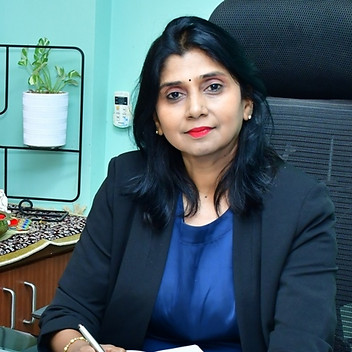
About Sripriya
I am a…
Educator/Teacher
Bio
Sripriya Krishnakumar is a committed and visionary educator with over two decades of experience across diverse educational roles. As the Head of School at Velammal Global School, she brings a deep understanding of learner needs, curriculum integration, and team leadership. Her journey spans early years to senior secondary education, with expertise in both CBSE and Cambridge curricula, including IGCSE and A Levels.
Her leadership at Velammal Global School has been marked by consistent academic excellence and innovation. Under her guidance, the school has earned multiple Outstanding Cambridge Learner Awards, with students achieving Top in India, High Achievement, and Best Across recognitions. These achievements reflect her focus on academic integrity, student-centered planning, and outcome-based strategies.
Sripriya is deeply invested in fostering global citizenship among students. Initiatives to build global-mindedness are a core motto of her leadership—reflected in flagship programs like the Model United Nations (MUN), Climate Conference, and Global Odyssey, which empower learners to engage with real-world issues through collaboration and critical thinking.
She strongly believes in the power of team synergy and shared purpose. By nurturing teacher capacity through mentoring, training, and professional learning communities, she ensures that educational practices stay dynamic and reflective. Her calm, inclusive leadership style creates a culture of trust, growth, and high expectations.
A continuous learner herself, Sripriya holds several professional certifications and stays actively involved in educational leadership forums. Her approach blends strategic thinking with compassion—guiding Velammal Global School to be not only a hub of academic excellence, but also a community that nurtures confident, ethical, and globally aware individuals.
I'm passionate about
My deepest satisfaction comes from seeing students grow into confident learners who can think critically, collaborate meaningfully, and lead with heart.
An idea worth spreading
"When we educate with empathy, empower with purpose, and connect with the world, we don’t just produce achievers — we nurture changemakers".
The TED story
A Journey from Traditional to Transformational Leadership
When I first stepped into leadership roles, like many, I focused on tasks—managing timetables, ensuring curriculum compliance, and ticking boxes. Leadership was about control, procedures, and keeping the school running smoothly. It was, in essence, a traditional model: authoritative, administrative, and often reactive.
But over time, something changed. I realized that this approach, while necessary, wasn’t enough. Schools are living ecosystems, made up of people—teachers, students, parents—each with unique strengths, dreams, and challenges. Leadership had to move beyond managing systems; it had to inspire and empower.
This realization marked the beginning of my transformational leadership journey.
I started listening more deeply—to teachers’ aspirations, students’ voices, and parents’ hopes. I sought to understand what motivated my team and how I could create an environment where their talents could flourish. It wasn’t about issuing instructions anymore, but about co-creating a shared vision.
That vision centered on empowering educators to take ownership of their classrooms and growth, and on nurturing learners who were not only academically strong but globally aware, empathetic, and resilient. This shift sparked initiatives like the Model United Nations, Climate Conferences, and Global Odyssey—platforms where students stepped into leadership roles and connected classroom learning to global challenges.
Transformational leadership also meant embracing vulnerability as a leader—admitting when I didn’t have all the answers, being open to feedback, and adapting in real time. It meant fostering trust, encouraging innovation, and celebrating both successes and failures as opportunities for growth.
The impact has been profound. Teacher morale soared, students became more engaged and confident, and the school culture evolved into one where collaboration, creativity, and shared purpose thrived. Our academic results followed naturally—not as the sole goal, but as a reflection of a healthy, motivated learning community.
My journey from traditional to transformational leadership taught me that leading a school is not about control—it’s about connection. It’s about inspiring others to believe in a vision bigger than themselves and providing them the space to bring it to life.
Ultimately, education is a human endeavor. When leaders lead with empathy, courage, and openness, they don’t just manage schools—they transform lives.
Things you might not know
Drawing & Cooking