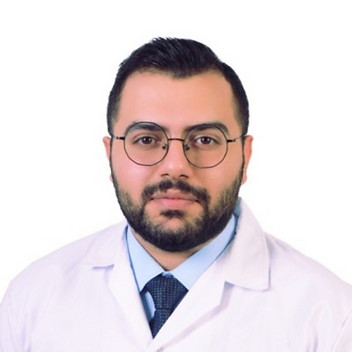
About Reza
I am a…
Business adviser, Educator/Teacher, Event planner, Idea generator, Scientist
Bio
Reza Salyanchi is an immunology researcher, flow cytometry specialist, educator, and science communicator working at the intersection of immunology, healthcare innovation, and artificial intelligence. With an academic background in Immunology and Laboratory Sciences, his work focuses on primary immunodeficiencies, immune dysregulation, and Hemophagocytic Lymphohistiocytosis, known as HLH.
He completed his MSc in Immunology at Shahid Beheshti University of Medical Sciences, where his thesis investigated perforin and CD107a expression in NK cells and cytotoxic T lymphocytes in patients with primary and secondary HLH. His research combines laboratory expertise, particularly in flow cytometry and molecular diagnostics, with translational thinking aimed at connecting genetic findings to real clinical challenges.
Beyond the laboratory, Reza is passionate about education, mentorship, and making complex science accessible. He has taught immunology to MSc entrance exam candidates, guided students in scientific writing and research skills, and trained learners in the use of artificial intelligence for academia, healthcare, and research. He has also contributed to national and international scientific events as an organizer, presenter, and executive team member.
His journey reflects a strong combination of scientific curiosity, practical laboratory experience, communication skills, and forward-looking innovation. He has contributed to research on immunodeficiency disorders, presented at scientific conferences in Iran and Europe, received the IUIS Gender Equality Competition4Ideas Award, and helped develop educational resources in immunology.
Reza believes that the future of healthcare depends not only on advanced diagnostics and research, but also on better communication, patient-centered thinking, and responsible use of emerging technologies. Through his work, he aims to bridge the gap between laboratory science, clinical impact, education, and the next generation of AI-supported healthcare.
I'm passionate about
I’m passionate about making complex science understandable, useful, and human-centered. My work in immunology, primary immunodeficiencies, HLH, and flow cytometry has shown me how powerful research can be when it directly supports better diagnosis, better communication, and better patient care.
I’m especially interested in the connection between advanced medical research and emerging technologies such as artificial intelligence. I believe AI can help researchers, clinicians, and students ask better questions, learn faster, and translate scientific knowledge into real-world impact.
Beyond the laboratory, I’m passionate about teaching, mentorship, scientific communication, and inspiring the next generation of healthcare professionals to think critically, communicate clearly, and use technology responsibly.
An idea worth spreading
The future of healthcare will not be shaped only by advanced laboratories, powerful technologies, or artificial intelligence. It will be shaped by our ability to connect them with human understanding.
As an immunology researcher and flow cytometry specialist, Reza Salyanchi works with complex immune disorders such as primary immunodeficiencies and HLH, where diagnosis can be difficult, time-sensitive, and deeply life-changing for patients and families. His work has shown him that science becomes truly powerful when laboratory findings are translated into clear clinical meaning, and when complex medical knowledge becomes understandable for doctors, students, patients, and society.
His idea worth spreading is that the next generation of healthcare must combine scientific precision with human-centered communication and responsible use of AI. Artificial intelligence can support research, education, diagnosis, and decision-making, but it should not replace human judgment. Instead, it should help scientists and clinicians ask better questions, explain complex findings more clearly, and make healthcare more accessible.
Reza believes that the bridge between science and society is as important as the science itself. By combining immunology, education, communication, and AI, we can create a healthcare future that is not only more advanced, but also more understandable, ethical, and human.
The TED story
My TED story is about the journey of connecting science, people, and the future of healthcare.
As an immunology researcher, I have worked with complex immune disorders such as primary immunodeficiencies and HLH, where a diagnosis is not just a laboratory result — it can change the direction of a patient’s life. Working with flow cytometry, genetic findings, and clinical data has taught me that science is powerful, but its true value appears when it becomes understandable, practical, and connected to human needs.
At the same time, my experience in teaching, mentorship, scientific events, and artificial intelligence has shown me another important truth: the future of healthcare depends not only on better technology, but also on better communication. We need scientists who can explain, clinicians who can listen, students who can think critically, and technologies that support human judgment rather than replace it.
My story is about building bridges: between laboratory science and patient care, between complex immunology and public understanding, and between artificial intelligence and human-centered healthcare. Through TEDx, I want to share the idea that the next generation of medicine should be not only more advanced, but also more ethical, accessible, and deeply human.
Things you might not know
People don’t know I’m good at connecting different worlds: laboratory science, education, communication, and technology. Alongside my work in immunology and flow cytometry, I enjoy turning complex scientific ideas into clear, practical, and engaging content for students, researchers, and wider audiences.
I’m also good at using AI tools creatively in academia and healthcare education, especially for research, teaching, prompt engineering, and scientific communication. Beyond science, I enjoy organizing events, mentoring students, creating educational materials, and bringing people together around meaningful ideas.