TEDx Organizers
TEDx organizers around the world create grassroots, local events dedicated to spreading ideas within their communities, and beyond. Select any name to learn more about them and their events.

Pablo Kostelec
Cambridge, United Kingdom
Improving health - in many ways. Through my career as a doctor, my involvement in quality improvement initiatives, by helping to spread good practice in the NHS. I am proud to be able to support this through my involvement in TEDxNHS.

Thanasis Kostikas
Annandale-On-Hudson, New York, United States

Elizabeth Kostina
Boston, Massachusetts, United States

Jelena Kostov

Aybike Koşum

Niko Kosunen

Kris Kosyk
Lviv, Ukraine

Brian Kot
Hong Kong

Pratap Kotabagi
Hubli, India
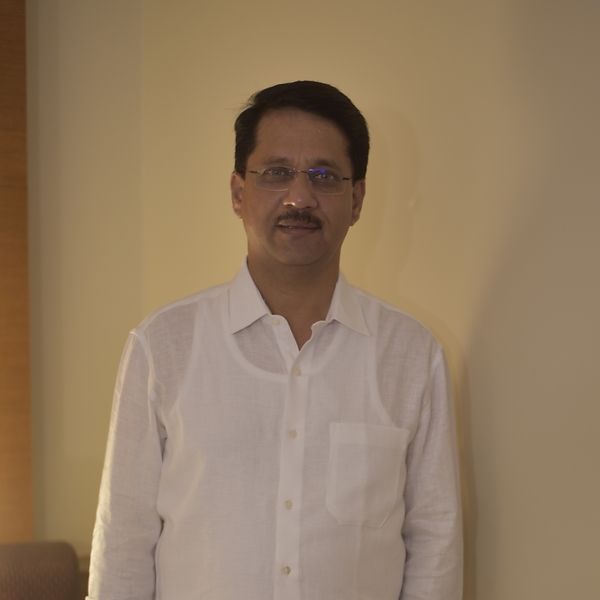
Sanjay Kotabagi
Hubballi, India

Hritik Kotadia
Mumbai, India

Divyansh Kotawala
Jaipur, India

Kweighbaye Kotee
Brooklyn, New York, United States

Apeksha Kothari
Mumbai, India

Harsheel Kothari
Rajkot, India
I’ve always been drawn to the night sky—through astrophotography I spend clear evenings chasing the faint glow of distant galaxies and nebulae, a reminder that we’re part of something vast and ever-unfolding. That same wonder fuels my work on VisioGene.in, where we’ve built AI-driven retinal-scan tools grounded in retinopathy and robust research to help detect health problems early—especially in rural India, where specialist care can be days or weeks away.
By day, I dive into hands-on research, exploring emerging technologies and crafting solutions that bridge science and real-world needs. Off the clock, twelve years on the tennis court have taught me that precision, strategic thinking, and perseverance are just as vital in life as they are in a match. Together, these passions—exploring the cosmos, empowering underserved communities with AI, chasing scientific breakthroughs, and the discipline of sport—shape how I approach every challenge: with curiosity, creativity, and a drive to make an impact.

Himesh Kothari
Kharagpur, India
Reading, Communication, Earth

Pari Kothari

Viti Kothari
Plaines Wilhems, Mauritius
Learning, environment, innovation, design, creating value

Youvvraj Kothawala
Ahmedabad, India
Engineering and economics are two fields that, when combined, offer a powerful lens through which to solve real-world challenges. My passion for both stems from their ability to shape societies, drive innovation, and optimize resources for efficiency and sustainability. Engineering, at its core, is about problem-solving and creation—designing machines, structures, and systems that enhance human life. Whether it’s mechanical engineering refining manufacturing processes or electrical engineering advancing renewable energy, this field pushes the boundaries of what is possible. On the other hand, economics provides the framework for understanding how these advancements integrate into markets, impact industries, and influence global development. The intersection of STEM and economics is particularly exciting because technological progress is only as impactful as its implementation within economic systems. For example, electric vehicles are a revolutionary engineering feat, but their widespread adoption depends on factors like cost-benefit analysis, government incentives, and supply chain optimization.
One of the most fascinating aspects of engineering is its tangible impact on society—innovations in robotics, automation, and sustainable infrastructure are transforming industries at an unprecedented pace. However, without economic insight, even the most groundbreaking technology may fail to achieve its full potential. Economics helps quantify the feasibility, scalability, and accessibility of engineering advancements, ensuring that solutions are not just theoretically brilliant but also viable in the real world. Take renewable energy as an example: engineers develop solar panels with increasing efficiency, but the economic principles of supply and demand, subsidies, and investment decisions determine their actual deployment. Similarly, artificial intelligence is revolutionizing industries from healthcare to finance, but its economic implications—job displacement, ethical concerns, and productivity shifts—must be carefully analyzed to harness its benefits while mitigating risks.
Beyond their theoretical applications, both fields share an analytical foundation. Engineering relies on mathematical modeling, physics, and computational simulations to design and test solutions, while economics applies statistical models, optimization techniques, and data analysis to understand market trends and policy impacts. This blend of logic, creativity, and practical application makes the intersection of STEM and economics a thrilling space for innovation. Whether designing energy-efficient machinery, optimizing logistics for global trade, or contributing to economic policies that promote technological growth, the ability to bridge both disciplines allows for well-rounded, impactful decision-making. My passion for engineering fuels my desire to innovate, while economics provides the strategic perspective needed to implement those innovations effectively. Together, they create a pathway toward a future where technology not only advances but does so in a way that is economically viable, sustainable, and beneficial for society.

Monishi Kothiyal

Advait Kothuri

Apurva Koti
Hyderabad, India
Writing, music, software development, making a difference.

Karim Kotobi
Madrid, Spain

Brenton Kotorri
Tirana, Albania