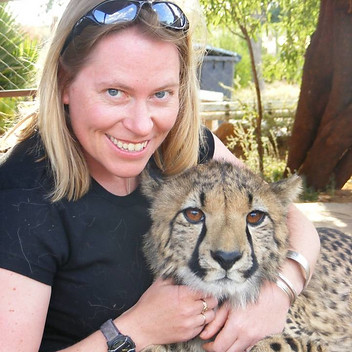
Amy Dickman
Director at Ruaha Carnivore Project, University of Oxford
TED Attendee
Ruaha, TanzaniaAbout Amy
I am a…
Atheist, Brainstormer, Change agent, Environmentalist, Project manager, World traveler
Bio
I am the Founder and Director of the Ruaha Carnivore Project, an Oxford University non-profit project in a remote area of southern Tanzania. I have always been passionate about wildlife, particularly big cats, and have been a field conservationist in Africa for over 20 years. I have an MSc from Oxford University and a PhD from University College London, and am a National Geographic Explorer. I am committed to community-led conservation, and my work in Tanzania focuses on adjusting the cost-benefit ratio of wildlife presence, so that local people become genuine advocates for conservation. We engage young warriors to understand and reduce cultural lion killing, help protect people and livestock from carnivore attacks, and develop wide-ranging community benefit initiatives, focused particularly on education (especially of girls), healthcare and veterinary health. The project is having important local success, but I am very keen to learn from others, see how we can improve our work, and eventually use what is learned in Ruaha to benefit people and wildlife elsewhere. Please do get in touch or come up and say hi at the conference!
I'm passionate about
Conservation, wildlife, empowering local communities, working together to make peoples' lives better, and being open-minded
An idea worth spreading
Lions are one of the world's most iconic species - they were the first animal represented in figurative art, are the national animal for many countries (most of whom don't even have lions), and are immortalised through coats of arms, sports teams and a thousand other cultural representations. Remarkably, the decline of this highly visible species has gone almost unnoticed - most people are shocked to learn that there are now as few lions left in Africa as rhinos.
This decline has largely been driven by the fact that local people have no stake in wildlife conservation, so lion habitat, prey and lions themselves disappear to make space for settlements, farms and roads. My work has shown time and again that the future of many of our most iconic species is dependent upon the wellbeing of those living alongside them. In many cases, the poorest people in the world are being expected to maintain dangerous species, usually for the benefit of the richest people in the world, and unsurprising this leads to high levels of human-wildlife conflict and killing.
I believe that this situation, where extremely poor people are managing a resource with such immense international value, can be used to really empower local communities and drive conservation-led development. If we can translate that global value into local value, then these communities can be uplifted through conservation, with huge benefits for both people and wildlife. We are doing that on a small scale in Tanzania, but believe that with more investment and more global attention, conservation-led development could transform the valuation of the natural world, and lift millions out of poverty.
Areas of expertise
Big cats, Community conservation, Conservation, Tanzania
The TED story
This will be my first TED Global Conference and I am very excited to make connections and hopefully use the insights to improve our work in Tanzania
Things you might not know
Telling funny stories