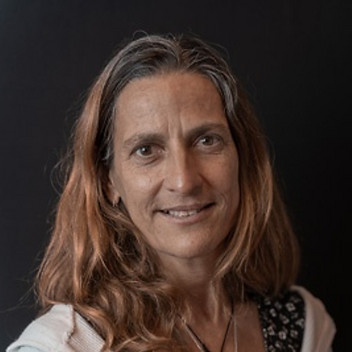
About Ana
I am a…
Care taker, Change agent, Educator/Teacher, Event planner, Parent, Project manager, Scientist, Student, Writer/Editor
Bio
Assistant Professor at the Faculty of Human Kinetics in the Bachelor's and Master's courses in Psychomotor Rehabilitation, Doctorate in Education and Inclusive Education and in the Post-Graduation in Special Education / Cognitive and Motor Domain.
Trainer in the Post-university Advanced Specialization Course in Cognitive-Behavioral Psychotherapy in Childhood and Adolescence (INSPSIC) and in the Advanced Specialization Courses in Child and Adolescent Psychopathology and Clinical and Health Psychology (CRIAP).
Trainer accredited for the area of Developmental Disorders by the Council for Continuous Training. Trainer accredited by DGERT and the Order of Psychologists.
Frequency of the 5th year of Clinical Psychology, in the cognitive-behavioral area. Until July 2020, he performed clinical activity in Special Education and Rehabilitation and Psychomotor Intervention at Pin – Progresso Infantil.
Vice President of the Faculty of Human Kinetics (2022-2025) and Coordinator of the 1st Cycle Psychomotor Rehabilitation Course at Faculty ok Human Kinetics (since 2005). Member of the Ethics Committee for Research at the Faculty of Human Kinetics (2013-2024)
Founding member of the Portuguese Attention Deficit Society
Most significant publications:
• Rodrigues, Ana & Antunes, Nuno (2014) . “Mais Forte do que Eu! – Hiperactividade e Défice de Atenção. Causas, consequências e soluções” – Um guia para Pais e Professores. Lua de Papel, Grupo Leya Editores, Maio 2014.
• Rodrigues, Ana; Antunes, N. & Jesus, G (2018) - Hiperactividade e Défice de Atenção. In Nuno Antunes e Equipa Pin. Sentidos -Leya Editores, 2018.
• Brígido, E. & Rodrigues, A. (2018). Perturbação do Espetro do Autismo - Revisão Bibliográfica. Revista de Educação Especial e Reabilitação, 25: 83-95
• Rodrigues AR, Santos S, Rodrigues A, Estevens M, Sousa E (2019) Executive profile of adults with intellectual disability and psychomotor intervention’ effects on executive functioning. Physiother Res Rep 2: doi: 10.15761/PRR.1000122
• Rodrigues, Ana & Neves, Mariana (2020). O papel das entrevistas e das escalas de avaliação de comportamentos na PHDA. In Moura, O; Pereira,M & Simões, M. (Ed). Perturbação de Hiperatividade/Défice de Atenção: Diagnóstico, Intervenção e Desenvolvimento ao Longo da Vida. Editora Pactor
• Brigido, E., Rodrigues, A. & Santos, S. (2021). Autism Spectrum Disorder behavioural profiles: a cluster analysis exploration. International Journal of Disability, Development and Education, https://doi.org/10.1080/1034912X.2021.1895084
• Brigido, E., Rodrigues, A. & Santos, S. (2021). Construção e Validação do Questionário de Comportamentos Típicos na Perturbação do Espetro do Autismo, Revista Brasileira de Educação Especial, 27, e0227, https://doi.org/10.1590/1980-54702021v27e0227
• Brigido, E., Rodrigues, A., & Santos, S. (2021). Correlações entre os perfis Comportamentais, Funcionamento Executivo e Empatia na Perturbação do Espetro do Autismo: Orientações para a Intervenção. Revista Brasileira de Educação Especial, 28, e0033, https://doi.org/10.1590/1980-54702022v28e0033
I'm passionate about
Horses, children,brain sciences, my family. (not necessarily in this order)
An idea worth spreading
If we need the word INCLUSION we have a long way to go...
Accepting human´s diferences is civilizing your brain...
Human Behavior is an expression of our brain in relation to a context, a task and others. If you don´t see the brain, the context, the task ant the relation, you will not be able to understand human behavior
Is punisment is the answer to disruptive behavior, why are we talking more and more about disruptive behavior?
The world change... children are different... learnig is a diferent process... why does classrooms look the same? Why don´t teacher´s change them?
If tou keep doing the same thing you wil get the same result Why don´t teacher´s change their educational pratices when something don´t work?
Sientific evidence is one thing.... changing human´s minds and beliefs is another. It takes a lot a time and persistence.
Laws, rules, regulations... and Inclusion. Do we need them? Do they help?
This are some questions that lead a lot of thoughts that i think is worth spreading. Not coldes ideias but discussions that we need to have.
Areas of expertise
Childrens Mental Health, Equine Assisted Therapies, Inclusive Education, Neurodevelopmental Disorders, Psychomotor Therapy, Special Education
The TED story
Not a long one. Just an admiror and i follow some ted talks (sometimes). I have a good friend that as already organized tED conferences in Portugal and i know how she loves it.
Things you might not know
Making things with my hands