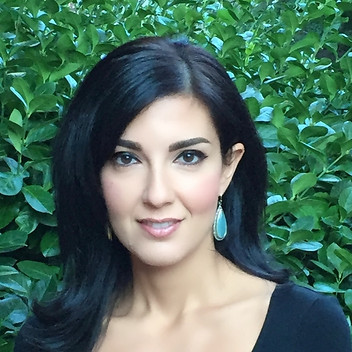
Shahrzad Sabet
Director and Research Fellow at New York University and Center on Modernity in Transition (COMIT)
TED Attendee
New York, New York, United StatesAbout Shahrzad
I am a…
Activist, Artist, Brainstormer, Change agent, Concerned citizen, Educator/Teacher, Explorer, Foodie, Idea generator, Scientist, Student, World traveler, Writer/Editor
Bio
Shahrzad Sabet is Co-Director of the Center on Modernity in Transition and a Fellow at New York University's Institute for Public Knowledge. Her research and training span a variety of disciplines, including political science, philosophy, economics, and psychology. She is currently working on a book entitled "The Crisis of Identity and the Case for Human Oneness," which explores how a reimagined universalism can fundamentally resolve the social and philosophical tensions around collective identity, and the surging identity politics to which they give rise. The book turns received wisdom on its head, arguing that, far from threatening or contradicting the diversity of humankind, an identity rooted in human oneness is uniquely equipped to ensure the fundamental security and flourishing of our other—and otherwise unstable—identities and affiliations.
Dr. Sabet has held positions at Princeton University, the University of Maryland, and Harvard University, where she received her PhD. Her work has been featured in outlets such as The New York Times and the Washington Post.
I'm passionate about
Creating spaces and institutions--like the Center on Modernity in Transition, which I founded and co-direct--where thinkers and practitioners can creatively reimagine the concepts and ideas upon which our society is built.
An idea worth spreading
An idea worth spreading is encapsulated in my current book project, "The Crisis of Identity and the Case for Human Oneness"--here's an abstract:
Questions of identity and belonging have surged to prominence in recent years, finding expression in virtually every aspect of collective life. As the forces of our global age challenge boundaries (both literal and figurative) that define group identities, the secure sense of belonging these identities have traditionally supplied is increasingly frustrated or lost, resulting in confusion, insecurity, conflict, and ever more forceful assertions of difference. Confronted with this crisis of identity, many thinkers have proposed the reimagination of national identity: a newly enlightened and capaciously inclusive form of nationalism, they suggest, can provide a shared context of belonging within which a diversity of narrower identities and attachments can be reconciled.
This book invites readers to consider a different solution: a collective identity based on the oneness of humankind. Through a combination of philosophical and empirical inquiry, Securing Identity challenges the assumption that a universal human identity must be utopian, homogenizing, or too far removed from the everyday realities of ordinary people. The book turns received wisdom on its head and argues that, far from threatening or contradicting the diversity of humankind, an identity rooted in human oneness is uniquely equipped to ensure the fundamental security and flourishing of our other—and otherwise unstable—identities and affiliations. What emerges is a transformative conception of human oneness that permeates all identities and relationships, and finds expression as much in the local and the national as it does in the global and international.
Things you might not know
Writing rhyme