About Divya Pratap
I am a…
Athlete, Brainstormer, Concerned citizen, Educator/Teacher, Engineer, Entrepreneur, Hindu, Inventor, Performer, Photographer, Project manager, Student, Technologist
Bio
I am a student researcher, technology innovator, and community leader passionate about using science and technology to create meaningful social impact. My work brings together artificial intelligence, robotics, education, and leadership with the belief that innovation is most powerful when it improves people's lives.
As the founder of Flora Tech, I have led initiatives that make STEM education more accessible while exploring practical technological solutions for real-world challenges. Through educational outreach and mentoring, I have worked to inspire students to develop curiosity, creativity, and problem-solving skills.
My academic interests center on artificial intelligence, particularly the reliability and safety of Large Language Models. I have conducted research on mitigating AI hallucinations, reflecting my broader interest in building trustworthy and human-centered AI systems. Beyond AI, I actively participate in robotics competitions and engineering projects that transform ideas into practical solutions.
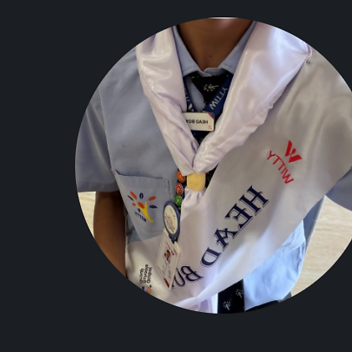
Leadership has been an integral part of my journey. As the elected Head Boy of my school, I represent a diverse student community, organize large-scale events, and collaborate with students, teachers, and administrators to foster an environment of innovation, responsibility, and inclusivity. These experiences have strengthened my ability to lead teams, communicate effectively, and turn ambitious ideas into reality.
Outside academics and technology, I enjoy exploring questions about human consciousness, learning, and the future relationship between humans and intelligent machines. I believe that some of the world's most transformative ideas emerge where science, philosophy, and human experience intersect.
As a TEDx organizer, my vision is to create a platform that celebrates curiosity, encourages thoughtful dialogue, and amplifies ideas capable of inspiring positive change. I hope to bring together researchers, entrepreneurs, artists, educators, and changemakers whose stories challenge assumptions, spark innovation, and empower others to think differently.
I believe every great innovation begins with a question, and every meaningful conversation has the potential to shape the future. Through TEDx, I aim to build a community where ideas are shared not only to inform, but to inspire action.
I'm passionate about
I am passionate about the intersection of technology, human potential, and meaningful impact. What excites me most is not simply building new technologies, but understanding how they can solve real-world problems and improve lives. Whether through artificial intelligence, robotics, education, or community leadership, I am driven by the belief that innovation should always serve humanity.
Artificial intelligence has become one of my deepest academic interests because it represents both an extraordinary opportunity and a profound responsibility. My research into the reliability of Large Language Models has strengthened my conviction that the future of AI depends not only on making systems more capable but also more trustworthy, transparent, and aligned with human values. I am fascinated by the technical challenges behind intelligent systems, but equally by the ethical and philosophical questions they raise.
Beyond AI, I am passionate about education and creating opportunities for others. Through STEM outreach and mentoring, I have seen how a single moment of curiosity can inspire someone to pursue science, engineering, or entrepreneurship. I believe knowledge becomes most valuable when it is shared, and I enjoy helping others discover the confidence to explore, question, and create.
Leadership is another passion that has shaped my journey. Serving as the elected Head Boy of my school has taught me that leadership is not about titles or authority; it is about listening, building trust, bringing people together, and creating an environment where everyone has the opportunity to succeed. The most effective leaders are those who empower others to lead.
I am also deeply interested in the broader questions that define our future: How will humans and intelligent machines coexist? How can technology strengthen communities instead of dividing them? What responsibilities come with creating increasingly powerful systems? These questions motivate me to keep learning across disciplines, drawing inspiration not only from science and engineering but also from philosophy, psychology, and history.
Outside of academics, I enjoy exploring new ideas, participating in robotics and innovation projects, reading about emerging technologies, and engaging in conversations that challenge conventional thinking. I believe curiosity is one of humanity's greatest strengths, and I strive to approach every challenge with an open mind and a willingness to learn.
Ultimately, I am passionate about building a future where technology amplifies human creativity, education empowers every individual, and ideas inspire action. That is why TEDx resonates so deeply with me—it celebrates the power of ideas to connect people, spark curiosity, and create lasting change.
An idea worth spreading
Technology should amplify humanity, not replace it.
Throughout history, every transformative innovation has extended human potential rather than diminished it. Fire extended our ability to survive, the printing press expanded knowledge, electricity transformed civilization, and the internet connected billions. Artificial intelligence is the next chapter in that story—but only if we choose to build it responsibly.
As AI becomes increasingly integrated into our lives, the question is no longer whether machines can think, but whether they can help us think better. The goal of technology should never be to replace human creativity, empathy, curiosity, or judgment. Instead, it should empower people to solve larger problems, make better decisions, and unlock opportunities that were previously unimaginable.
I believe the future belongs not to those who build the most powerful technologies, but to those who build technologies that people can trust. Trust is earned through transparency, reliability, ethical design, and a commitment to serving humanity rather than merely advancing capability.
This philosophy extends beyond artificial intelligence. Whether in education, healthcare, agriculture, or environmental sustainability, innovation should be measured by the positive impact it creates in people's lives. A breakthrough is only meaningful if it makes society more equitable, more informed, and more capable of addressing its greatest challenges.
Technology alone cannot solve humanity's problems. It requires curious minds, compassionate leaders, and communities willing to ask difficult questions. Every invention begins with curiosity, but its true value is determined by how it improves the human experience.
The idea I hope to spread is simple: **the future of technology should not be about building machines that are more human—it should be about building technologies that help humans become more capable, more creative, and more connected than ever before.**
Areas of expertise
AI Safety, Artificial Intelligence (AI), Automation, Community Building, Design Thinking, Educational Technology, Emerging Technologies, Entrepreneurship, Ethics of Artificial Intelligence, Human-Centered Technology, Innovation, Large Language Models (LLMs), Problem Solving, Project Management, Public Speaking, Research, Robotics, Science Communication, STEM Education, Team Leadership, Technology for Social Impact, Trustworthy AI, Youth Leadership
The TED story
My journey with TED began long before I ever imagined organizing a TEDx event. As someone who is endlessly curious, I found myself drawn to TED Talks because they brought together ideas from every corner of human knowledge—science, technology, psychology, philosophy, education, art, and entrepreneurship. They showed me that one powerful idea, communicated with clarity and purpose, could change the way people think.
As my interests in artificial intelligence, robotics, and research grew, TED became more than a source of inspiration; it became a model for how complex ideas could be made accessible to everyone. Watching researchers, innovators, and changemakers share not only their successes but also their failures and questions taught me that progress begins with curiosity and honest conversation.
That philosophy has influenced many of my own pursuits. Whether conducting research on trustworthy artificial intelligence, mentoring students through STEM initiatives, leading my school community as the elected Head Boy, or working on technology projects with real-world applications, I have always been motivated by a desire to learn, share knowledge, and create positive impact. I have come to believe that ideas become truly valuable only when they are shared, challenged, and transformed into action.
Organizing TEDx is a natural extension of that belief. It is an opportunity to build a platform where voices from different disciplines and backgrounds can come together to inspire meaningful conversations within our community. I want our TEDx event to celebrate not only remarkable achievements but also curiosity, resilience, creativity, and the courage to question conventional thinking.
For me, TED has never been just about watching talks—it has been about embracing a mindset. A mindset that believes great ideas can come from anyone, that every meaningful innovation begins with a question, and that thoughtful conversations have the power to shape individuals, communities, and the future itself.
As a TEDx organizer, my goal is to create an experience where every attendee leaves with a new perspective, every speaker feels empowered to share an authentic story, and every idea has the opportunity to inspire action beyond the stage. If even one conversation started at our event leads to a new collaboration, a new invention, or a new way of seeing the world, then our TEDx journey will have fulfilled its purpose.
Things you might not know
People don't know I'm good at turning ambitious ideas into structured plans. I've always been drawn to projects that initially seem too large, too complex, or even impossible. Rather than feeling overwhelmed, I naturally begin breaking them down into smaller, manageable pieces—identifying the goal, understanding the constraints, setting milestones, assigning responsibilities, and building a path from an idea to execution.
Over time, I've realized that this way of thinking has become one of my greatest strengths. Whether I'm leading a team, organizing an event, conducting research, or developing a technology project, I enjoy transforming uncertainty into clarity. I find satisfaction in asking questions like: *What is the first step? What resources do we need? Who can contribute? What could go wrong, and how do we prepare for it?* These questions help me convert ambitious visions into practical action.
What many people don't see is that planning isn't just about making schedules or checklists—it's about creating an environment where people can do their best work. Every successful project depends on individuals with different strengths working toward a common purpose. I enjoy bringing together diverse perspectives, encouraging collaboration, and ensuring that everyone understands not only what they're doing, but why it matters. Seeing a group of people evolve into a cohesive team is just as rewarding as seeing the final outcome.
This mindset has shaped the way I approach leadership. I've learned that ambitious goals become achievable when they are supported by careful preparation, adaptability, and consistent communication. Plans rarely unfold exactly as expected, and I enjoy solving problems as they arise, adjusting strategies without losing sight of the bigger vision. To me, setbacks are not signs of failure—they're opportunities to refine the process and build something stronger.
I also enjoy designing systems that make complex work easier. Whether it's organizing information, improving workflows, or creating frameworks for research and collaboration, I like finding ways to reduce confusion and increase efficiency. I believe that good systems allow creativity to flourish because people spend less time navigating obstacles and more time generating ideas.
Perhaps what surprises people most is that I genuinely enjoy the process as much as the result. There's something deeply rewarding about watching an idea evolve—from a conversation or a sketch in a notebook into something tangible that creates value for others. It reminds me that every meaningful achievement begins not with certainty, but with the willingness to take the first organized step.
Looking back, I think this ability has become the common thread connecting many of my experiences. Whether in research, technology, leadership, or community initiatives, I've discovered that I don't just enjoy having ideas—I enjoy building the structure that allows those ideas to become reality. I believe the world doesn't simply need more ambitious thinkers; it needs more people who can transform ambition into action.