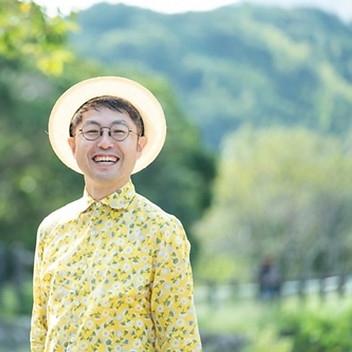
About HIROYOSHI
I am a…
Business mentor, Connector, Designer, Photographer
Bio
Hiroyoshi Iwaki is a people designer, organizational development strategist, and community builder dedicated to creating a society where everyone can believe in their own potential.
His career path has been anything but linear. After graduating from university, he experienced a period of unemployment, followed by roles in real estate and a judicial scrivener’s office. These early experiences exposed him to both the structural and human sides of society, but it was his later work in social impact that fundamentally shaped his perspective.
Iwaki joined a company focused on solving social issues, where he led initiatives addressing poverty in Bangladesh and later took responsibility for projects supporting individuals with developmental disabilities. During this time, he also faced significant personal challenges, including Graves’ disease, adjustment disorder, and depression. These experiences deepened his understanding of human vulnerability, resilience, and untapped potential.
Afterward, he worked in a university startup and a design company, before transitioning into human resources at a driving school organization. There, he began to develop his core philosophy: that organizations are not merely systems for efficiency, but ecosystems where human potential can either be constrained or expanded.
Currently, Iwaki works at Tsunagaru Inc., where he leads organizational development initiatives with a focus on aligning people, purpose, and performance. His role goes beyond traditional HR—he positions himself as a “people designer,” bridging gaps between individuals, teams, and leadership to unlock collective potential.
He is particularly known for designing “connections” that generate value. His work centers on linking people to people, business to business, and internal culture to external ecosystems. Through these connections, he aims to create environments where individuals can encounter opportunities that fundamentally change their lives.
In addition to his corporate role, Iwaki is actively building platforms and communities that expand human possibility. He is the founder of “Grow Your Seed,” an initiative designed to help individuals discover, develop, and expand their talents. The concept is rooted in the belief that potential is often invisible—not because it does not exist, but because it lacks the right environment to emerge.
He also organizes community-driven events such as “Bar Iwaki,” where people from diverse backgrounds—including educators, entrepreneurs, artists, and corporate professionals—gather in psychologically safe spaces. These events are intentionally designed to foster serendipitous encounters and authentic dialogue, without hierarchy or transactional intent.
Another initiative, “Opening People,” explores deeper questions around human potential and why it becomes constrained. Through facilitated dialogue and systemic coaching approaches, participants are invited to reflect on their own limitations and rediscover possibilities.
Beyond community building, Iwaki is also engaged in creative work as a freelance photographer and videographer. Through documenting people, events, and stories, he captures moments of transformation and connection, further reinforcing his mission of expanding human potential.
At the core of all his work is a simple yet powerful belief: human potential is not fixed—it is shaped by relationships, environments, and the stories we tell ourselves. By redesigning these elements, individuals and organizations can unlock possibilities that were previously unseen.
Iwaki’s vision is to create a world where people do not give up on themselves—a world where everyone can say, with confidence, “I can become who I truly want to be.
I'm passionate about
I’m passionate about unlocking human potential and creating a world where people can truly believe in themselves.
For much of my early life, I struggled to find my place. After graduating from university, I experienced a period of unemployment and uncertainty. I moved from one job to another—from real estate to a judicial scrivener’s office—searching for direction, but without a clear sense of purpose.
Later, I joined a company focused on solving social issues. There, I worked on poverty alleviation projects in Bangladesh and led initiatives supporting individuals with developmental disabilities. Through these experiences, I encountered people whose potential was often overlooked—not because they lacked ability, but because they lacked the right environment to thrive.
At the same time, I faced my own challenges, including illness and mental health struggles. These experiences forced me to confront the limitations I had placed on myself and question the narratives I believed about who I could become.
Through these experiences, I came to a powerful realization:
human potential is not fixed—it is shaped by relationships, environments, and the stories we tell ourselves.
This belief has become the foundation of everything I do.
Today, I work as what I call a “people designer,” focusing on organizational development and the design of human connections. I work with individuals, teams, and leaders to create environments where people feel seen, connected, and aligned with a meaningful purpose.
I’m passionate about designing organizations where people do not just perform, but grow. I believe that when people feel disconnected from purpose or unheard in dialogue, their potential remains dormant. But when trust, clarity, and shared meaning are cultivated, individuals and teams begin to unlock capabilities they did not know they had.
Beyond organizations, I’m passionate about creating communities and spaces where meaningful connections can emerge. I organize gatherings where people from diverse backgrounds—educators, entrepreneurs, artists, and professionals—can meet without hierarchy or expectation. In these spaces, people often encounter new perspectives that reshape how they see themselves and their possibilities.
I believe these moments of connection are not accidental. They can be intentionally designed.
I’m also passionate about helping individuals discover, develop, and expand their talents. Through initiatives like “Grow Your Seed,” I aim to create platforms where people can explore their potential and take steps toward realizing it. Too often, potential remains unseen—not because it does not exist, but because the conditions for it to emerge have not been created.
In addition, I express this passion through creative work as a photographer and videographer. By capturing people, stories, and moments of transformation, I seek to make visible the invisible shifts that happen when people connect and grow.
At the core of my passion is a simple belief:
people do not give up on themselves because they lack potential—they give up because they lose the environment and relationships that allow that potential to emerge.
If we can redesign these conditions, we can change not only individual lives, but entire organizations and communities.
My vision is to build a world where people do not give up on themselves—a world where everyone can say, with confidence, “I can become who I truly want to be.”
And that is why I’m passionate about what I do.
An idea worth spreading
What if human potential is not something we are born with, but something that is designed?
Many people grow up believing that their abilities, talents, and possibilities are fixed. We are told, directly or indirectly, what we can or cannot become. Over time, these messages become internalized, shaping the way we see ourselves and limiting what we believe is possible.
But what if this belief is fundamentally wrong?
Through my personal and professional journey, I have come to believe that human potential is not fixed. It is shaped—by relationships, environments, and the stories we tell ourselves.
This realization did not come from theory alone. It emerged from lived experience.
Early in my career, I struggled to find my place in society. After graduating from university, I experienced a period of unemployment and uncertainty. I moved through different roles, from real estate to a judicial scrivener’s office, searching for meaning and direction.
Later, I joined a company focused on solving social issues, where I worked on poverty alleviation projects in Bangladesh and led initiatives supporting individuals with developmental disabilities. These experiences exposed me to people whose potential was often overlooked—not because they lacked ability, but because they lacked access to supportive environments.
At the same time, I faced my own personal challenges, including illness and mental health struggles. These moments forced me to confront my own limitations and question the narratives I had internalized about myself.
What I began to notice was this: when people encounter the right relationships, the right environment, and the right encouragement, something shifts. They begin to see themselves differently. And when that happens, their behavior, choices, and ultimately their lives begin to change.
Potential, then, is not something hidden inside us waiting to be discovered. It is something that emerges through interaction.
Today, I work as what I call a “people designer.” My role is to design connections—between individuals, teams, and organizations—in ways that expand what people believe is possible.
In organizations, I have seen how culture and leadership can either constrain or unlock potential. When people feel disconnected from purpose, unheard in dialogue, or unclear about direction, their potential remains dormant. But when alignment, trust, and shared meaning are cultivated, individuals and teams begin to thrive.
Beyond organizations, I also create spaces where people from diverse backgrounds can come together without hierarchy or expectation. In these spaces, something powerful happens: people encounter perspectives they have never seen before, and through that encounter, they begin to reimagine themselves.
These moments of connection are not accidental. They can be designed.
This is the core idea I want to share:
Human potential is not fixed—it is designed through relationships, environments, and narratives.
If this is true, then the implication is profound.
It means that instead of asking, “What am I capable of?” we can ask, “What kind of environment and relationships do I need to become who I want to be?”
It means that organizations should not only focus on performance, but on designing cultures that expand possibility.
It means that communities should not only gather people, but intentionally create conditions for meaningful connection.
And it means that each of us has the power—not just to change ourselves—but to design environments that unlock the potential of others.
In a world where many people feel limited by circumstances, labels, or past experiences, this shift in perspective can be transformative.
We do not need to wait for potential to appear.
We can create the conditions for it to emerge.
My vision is a world where people do not give up on themselves—a world where everyone can believe, with confidence, that they can become who they truly want to be.
And that world begins not with talent, but with design.
The TED story
My TED story is about how I discovered that human potential is not fixed, but designed.
For a long time, I struggled to find my place in the world. After graduating from university, I experienced a period of unemployment and uncertainty. I moved from one job to another, searching for direction, but feeling disconnected from myself and from society.
Things began to change when I entered the field of social impact. I worked on poverty alleviation projects in Bangladesh and later led initiatives supporting individuals with developmental disabilities. Through these experiences, I encountered people whose potential was often overlooked—not because they lacked ability, but because they lacked the right environment to grow.
At the same time, I faced my own personal challenges, including illness and mental health struggles. These moments forced me to confront my own limitations and question the beliefs I had about myself.
Through these experiences, I came to a realization:
human potential is not something we are born with—it is something that is shaped by relationships, environments, and the stories we tell ourselves.
This realization changed everything.
Today, I work as a “people designer,” creating connections between individuals, teams, and organizations to expand what people believe is possible. I design environments where people can rediscover their potential and take steps toward becoming who they truly want to be.
My story is not just about my journey. It is about a shift in perspective.
If potential is not fixed, then we are not limited by who we are today.
We can design the conditions to become who we want to be.
And that is the idea I want to share with the world.
Things you might not know
People don’t know I’m good at designing connections that change people’s lives.
At first glance, my work may look like organizational development, community building, or human resources. But at its core, what I do is much more subtle: I design the conditions where people can rediscover their potential.
This ability did not come from formal training alone. It emerged from a life shaped by uncertainty, transitions, and deep encounters with both people and myself.
After graduating from university, I struggled to find direction. I experienced a period of unemployment and moved between different roles, from real estate to a judicial scrivener’s office, without a clear sense of purpose. I often felt disconnected—from society, from others, and from myself.
Later, I joined a company focused on solving social issues, where I worked on poverty alleviation projects in Bangladesh and led initiatives supporting individuals with developmental disabilities. In these environments, I met people whose potential was often unseen—not because it did not exist, but because it had never been recognized or nurtured.
At the same time, I faced my own personal challenges, including illness and mental health struggles. These experiences forced me to look inward and confront the limiting beliefs I had about myself. They also deepened my sensitivity to the unseen struggles and possibilities within others.
Over time, I began to notice a pattern.
When people encounter the right person at the right moment, something shifts. A single conversation, a moment of being truly seen, or an unexpected connection can completely change how someone sees themselves. And when that happens, their actions, decisions, and ultimately their life trajectory begin to change.
I realized that these moments were not random. They could be designed.
Today, I describe myself as a “people designer.” I work at the intersection of individuals, teams, and organizations, intentionally creating connections that expand what people believe is possible.
People don’t always notice this skill because it often happens behind the scenes. It is not about being the center of attention, but about creating the conditions for others to shine. It is about sensing what is unspoken, connecting dots that are not yet visible, and bringing people together in ways that unlock new possibilities.
In organizations, I design environments where people feel connected to purpose, aligned with direction, and engaged in meaningful dialogue. When these elements come together, individuals and teams begin to unlock potential that was previously dormant.
Outside of organizations, I create communities and spaces where people from different backgrounds can meet without hierarchy or expectation. In these spaces, something powerful happens: people encounter new perspectives, challenge their assumptions, and begin to reimagine who they can become.
I believe that the ability to design such connections is a skill that is often underestimated, yet it has the power to transform lives, organizations, and even societies.
People don’t know I’m good at seeing potential in people before they see it themselves. I notice the small signals—the way someone speaks, the energy they carry, the stories they tell—and from these, I can often sense what they are capable of becoming.
But more importantly, I’m good at helping people see that potential for themselves.
Through conversations, environments, and experiences, I aim to create moments where people shift their self-perception. Because once that shift happens, everything else begins to follow.
At the core of this ability is a simple belief:
human potential is not fixed—it is shaped by relationships, environments, and narratives.
This is why I focus not only on individuals, but on designing the systems around them. Because when we change the system, we change what becomes possible.
My vision is to create a world where people do not give up on themselves—a world where everyone can believe that they can become who they truly want to be.
And perhaps what people don’t realize is that this vision is already being built—one connection at a time.