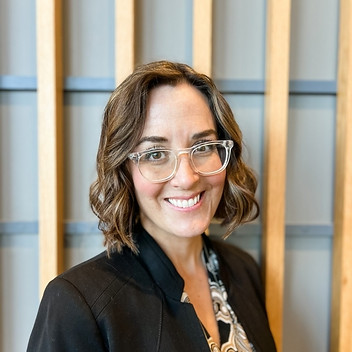
About Cary
I am a…
Artist, Brainstormer, Change agent, Consultant, Designer, Educator/Teacher, Entrepreneur, Musician, Performer, World traveler
Bio
Cary Lopez, PhD, is fascinated by one deceptively simple question: why is it so hard for people to work well together, even when they genuinely want to?
An organizational communication scholar, consultant, and entrepreneur, Cary helps leaders, teams, and institutions rethink collaboration, change, and the conversations that shape both. As co-founder and co-CEO of DesignConvo, she designs transformative workshops and strategic experiences that help organizations move from confusion to clarity, and from discussion to action.
Her work blends academic depth with practical application. Cary holds a doctorate in communication from Arizona State University and has spent more than two decades helping organizations lead change, strengthen culture, and build more human-centered ways of working. She is also a CPA, PMP, and Certified Change Management Professional—proof that she’s equally comfortable with systems, strategy, and the beautifully messy reality of people.
Cary’s research explores how hope, emotion, and communication shape collective action inside organizations. She is also co-author of The Collaboration Illusion: Why Working Together Sucks and How to Fix It.
At the heart of her work is a conviction that better futures don’t begin with better plans; they begin with better conversations.
I'm passionate about
I’m passionate about stories, strong tea, stormy weather, watching my tiny humans grow into incredible people, and the strange, fascinating emotional lives of human beings.
Some of my happiest hours involve a cozy fantasy or a thriller, a blanket, and the sound of rain outside. But the truth is, the same thing that draws me into a good novel also drives much of my work: I’m endlessly curious about what people are really feeling, what they’re not saying, and the stories shaping how they move through the world.
Professionally, that curiosity shows up in my work around communication, leadership, collaboration, and change. I’m especially drawn to the messy emotional terrain underneath organizational life: the hope, skepticism, burnout, resistance, trust, and moments when people are trying to decide whether they still believe in what’s possible.
I care about helping people and teams tell truer stories, have braver conversations, and create better futures together. Whether I’m reading fiction or facilitating a room full of leaders, I’m interested in the same thing:
What makes people believe, connect, and keep going?
An idea worth spreading
One idea worth spreading is this: what we often dismiss as cynicism or resistance to change in teams, organizations, and communities may actually be a hidden form of hope.
We tend to assume that hopeful people are the enthusiastic ones. You know them: the people who say yes, lean in, and stay positive. And we tend to read skepticism, frustration, or jadedness as the opposite: resistance, negativity, or disengagement.
But my research suggests something more complicated, and, I think, more human.
In many organizations, the people who sound the most skeptical are often the ones who once cared the most deeply. Their frustration is not always evidence that they have given up. Sometimes it is evidence that they have hoped before, invested before, and been disappointed before. In other words, what looks like “negativity” may actually be unfulfilled hope.
This distinction matters because when leaders misread those emotional signals, they often respond in exactly the wrong way. They try to “overcome resistance,” silence hard questions, or push more optimism into spaces where people are actually asking for something much more meaningful: evidence that change is possible, credible, and worth believing in.
The larger idea behind my work is that hope is not just a private feeling that individuals either have or don’t have. Hope is something people create (or lose) together. It is shaped through communication, shared experience, power, trust, and whether people believe they can take meaningful action. In that sense, hope is not just inspiration. It is a social and organizational phenomenon.
That shifts the conversation in an important way. If we want more hopeful workplaces, teams, schools, or communities, the answer is not simply better motivation, better messaging, or more positivity. The answer is creating the conditions in which people can see pathways forward, feel genuinely empowered, and experience real progress.
I believe this idea is worth spreading because it changes how we interpret human behavior in moments of uncertainty and change. It asks us to look differently at the people we are most tempted to label as “difficult,” “complainers,” or “checked out.” And it invites a more compassionate, honest, and practical question:
What if the people who seem hardest to reach are not the ones furthest from hope, but are instead the ones who have the most at stake in whether it survives?
Areas of expertise
Applied Improv, Collaboration, Futurism, Hope, Leadership, Organizational Change, Organizational Communication, Storytelling, Strategy
The TED story
My first memorable experience with TED was while I worked at the W.P. Carey School of Business in 2015. I had seen several TED talks online prior to that (probably through LinkedIn or Facebook), but hadn't really been moved by any stories until I encountered Shawn Achor's "the Happy Secret to Better to Work". I had been working with the Dean on creating a series of leadership development workshops, and we wanted to center them around workplace wellbeing. I shared that TedTalk in its entirety with 180+ leaders during one of the workshops, and it was so impactful, we ended up creating a whole series of wellbeing and happiness-at-work activities. I would go on to find TedTalks to help inspire other discussions (Angela Duckworth on Grit, Dan Pink on Motivation, Carol Dweck on Growth Mindset, Brene Brown on the Power of Vulnerability).
For me, TED has been both a source of education and inspiration, but also a model of how to do presentations "right".
I look forward to attending my first in-person TEDx conference at TEDxASU in the near future!
Things you might not know
A few surprising things: I have a connective tissue disorder, and I can contort my body into some pretty amazing pretzel forms. I've played piano since I was five and have participated in adult amateur piano competitions (and don't let the word "amateur" here fool you; many of the winners of these competitions go on to have professional music careers, playing with symphonies and ensembles around the world. To say I was a little out-classed in these competitions is an understatement).