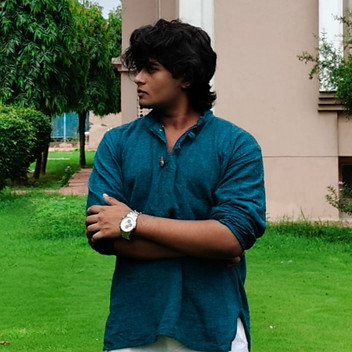
About Yash
I am a…
Designer, Musician, Student
Bio
Yash Sharma serves as the Design Head at TEDxSVC, where he leads the visual identity and creative direction of the event. With a strong eye for detail and a passion for storytelling through design, he plays a key role in shaping how TEDxSVC communicates its ideas visually across digital and on-ground platforms.
As a graphic designer with hands-on experience in branding, social media creatives, and event promotions, Yash ensures that every design element aligns with the core TEDx philosophy of “ideas worth spreading.” His work focuses on clarity, consistency, and creating visuals that leave a lasting impression on the audience.
Beyond design, he thrives in collaborative environments, working closely with marketing, content, and operations teams to bring concepts to life. Driven by creativity and purpose, Yash believes that strong design is not just about aesthetics, but about impact, connection, and meaning.
I'm passionate about
I am passionate about using creativity as a tool for impact, not just expression. For me, design is not about making things look good, but about making ideas clear, accessible, and meaningful. I believe visuals have the power to influence how people think, feel, and act, and that responsibility excites me.
I care deeply about intentional design, design that guides people toward clarity rather than confusion, and toward purpose rather than noise. I am driven by the idea that creativity, when paired with ethics and intent, can empower communities, amplify unheard voices, and spark real change.
What motivates me most is working at the intersection of ideas, youth leadership, and storytelling. I enjoy collaborating with people, building systems that communicate effectively, and shaping narratives that help important ideas reach the right audience. For me, design is direction, and I am passionate about using it to move people forward.
An idea worth spreading
We live in a world where design is often treated as surface-level beauty. Logos, posters, reels, aesthetics. But in reality, design quietly shapes how people think, feel, decide, and act. It influences what we trust, what we ignore, and what we believe.
Every interface we scroll, every sign we follow, every campaign we remember was designed. And with that comes power.
The idea is simple but urgent: design is a form of leadership.
When used responsibly, design can guide attention toward truth, empathy, and action. When misused, it can manipulate, misinform, and distract.
A well-designed public notice can save lives.
A clear financial chart can empower first-generation investors.
A thoughtful social media campaign can turn silence into participation.
The talk explores how young creators, especially students and designers, must stop seeing themselves as “just creatives” and start recognizing themselves as decision-makers shaping culture. Design is not neutral. It always points somewhere.
The question is not whether design influences people.
The question is where are we directing them?
This idea challenges people to treat design as a responsibility, not a trend. Because when visuals carry intention, they do more than look good. They move people forward.
The TED story
My TED story begins with a quiet realization rather than a loud moment. I noticed that people often remember how something looks before they remember what it meant. Posters, slides, Instagram posts, websites. Some made me stop, some made me scroll past, and very few made me think. That contrast stayed with me.
As a student and a designer, I started asking myself why certain ideas travel far while others, equally important, get lost. The answer was not the idea itself, but how it was communicated. I realized that design is often the difference between being heard and being ignored.
Over time, design stopped being a skill for me and became a responsibility. I saw how visuals could simplify complex ideas, build trust, and create participation. I also saw how careless design could mislead, overwhelm, or exclude people.
When I joined TEDxSVC, I understood that this platform was not just about talks on a stage, but about ideas finding direction. My role as Design Head allowed me to shape how those ideas reached people, not by speaking louder, but by communicating better.
My TED story is about choosing intention over aesthetics and impact over attention. It is about realizing that design does not just present ideas. It decides how far they go.
Things you might not know
What most people do not immediately see is that I am good at turning abstract ideas into structured systems. Beyond design, I have a strong ability to break down complex thoughts, align teams around a shared vision, and translate creativity into clear execution.
I am good at listening between the lines, understanding what people are trying to say before they say it fully, and shaping that into something concrete. Whether it is coordinating with multiple teams, managing timelines, or ensuring consistency across platforms, I naturally move toward clarity and order.
I am also good at staying calm under pressure and making thoughtful decisions when things get chaotic. While my work is visible through visuals, much of my strength lies in planning, problem-solving, and quietly making sure everything comes together seamlessly.