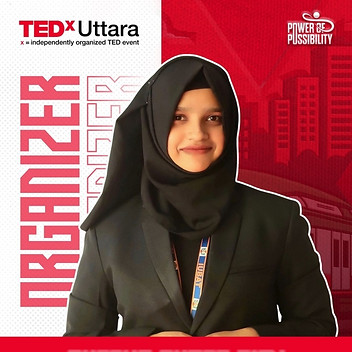
About Ayesha
I am a…
Brainstormer, Photographer, Student, Technologist
Bio
I am a student who is actively building experience in coordination, communication, and creative execution. I enjoy working in structured environments where clarity, responsibility, and teamwork matter.
Through event management and collaborative projects, I’ve learned how important preparation, adaptability, and problem-solving are under pressure. I’m particularly interested in technology, human behavior, and how ideas translate into action.
I value discipline, growth, and honest feedback — and I’m continuously working on improving both my technical and interpersonal skills.
I'm passionate about
I’m passionate about growth that is intentional, not accidental. I don’t just want to participate in things — I want to understand how they work, how they are structured, and how they can be executed better.
I’m deeply interested in communication — not just speaking, but clarity. How to introduce myself properly. How to represent my role accurately. How to present ideas in a way that feels real, not exaggerated. I care about wording, tone, and positioning because I understand that perception shapes opportunity.
I’m passionate about organized execution. Whether it’s managing guests at an event, coordinating logistics, or designing directional sign cards, I value structure, preparedness, and responsibility. I enjoy being the person who ensures things run smoothly behind the scenes.
I’m also drawn to ideas — especially where technology, human behavior, and critical thinking intersect. I like questioning assumptions. I don’t want surface-level understanding; I want depth. That’s why philosophy, science, and intellectual conversations attract me.
I’m passionate about becoming more capable — improving how I think, how I lead, how I handle pressure, and how I communicate. I respect discipline more than hype. I value feedback more than praise. I’m not interested in looking impressive; I’m interested in becoming competent.
Above all, I’m passionate about building a version of myself that is structured, thoughtful, and impactful — not loud, but effective.
Now let me challenge you:
If someone asked you tomorrow, “What do you consistently work on improving?” — could you answer clearly?
Passion isn’t what you say. It’s what you repeatedly choose to invest effort in.
An idea worth spreading
We need to normalize not knowing — and make learning more important than pretending.
In academic environments and even in professional spaces, people often feel pressure to appear intelligent rather than to actually improve. We hesitate to ask basic questions because we fear being judged. We stay quiet in discussions even when we are confused. Over time, this creates a culture where performance replaces understanding.
I believe the real strength lies in intellectual humility — the ability to say, “I don’t know, but I want to understand.”
When we stop pretending, we start progressing.
Another problem I notice is how easily we accept information without questioning it. We consume content rapidly — from social media, news, or even classrooms — but rarely pause to analyze it critically. Being informed is not the same as being thoughtful. True growth requires questioning assumptions, including our own.
Critical thinking should not just be an academic skill; it should be a daily habit.
I also believe execution matters more than intention. Many people have ideas. Fewer people follow through consistently. Whether it’s organizing an event, building a project, or improving personally, discipline and structure often matter more than motivation. Motivation fluctuates. Systems sustain progress.
Lastly, growth should be uncomfortable.
If you are always comfortable, you are probably not stretching your limits. Real improvement often comes from constructive criticism, from taking responsibility when things go wrong, and from reflecting honestly on your weaknesses. Avoiding discomfort may protect your ego, but it blocks development.
So the idea worth spreading is this:
Choose growth over image.
Choose questions over assumptions.
Choose discipline over temporary motivation.
In a world that rewards visibility, we should reward substance.
In a world that celebrates confidence, we should value clarity.
And in a world full of noise, we should practice thinking.
That shift — from performance to progress — can change classrooms, workplaces, and personal lives.
Areas of expertise
Communication Audience Experience, Event Coordination, Guest Management, Public Relations, Team Collaboration, Video Editing
The TED story
When I first joined TEDxUttara, I honestly saw it as just another opportunity to contribute and gain experience. I didn’t expect it to become something deeply memorable.
What surprised me most wasn’t the stage, the branding, or even the speakers — it was the people. I met individuals who were thoughtful, disciplined, and genuinely passionate about what they were doing. Working alongside such committed team members and interacting closely with speakers gave me a new perspective on collaboration and leadership.
There was a different kind of energy — one built on responsibility, creativity, and mutual respect. Behind the scenes, I saw how much precision and teamwork it takes to turn ideas into a meaningful experience for others.
I never expected to connect with such good people in such a short time. The conversations, the pressure, the late preparations, and the shared success created something more than just an event — it created growth.
TEDxUttara will always remain a special chapter for me, not just because of what we organized, but because of the people I met and the lessons I learned along the way.