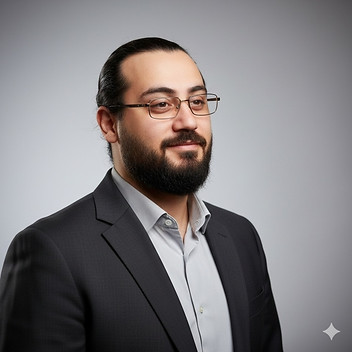
About Mert
Bio
Mert Atasal is an IB English teacher at IELEV High School, working at the intersection of language education, critical thinking, and student development. With a strong background in ESL, academic writing, and standardized test preparation, he teaches IB English B, IELTS, and Digital SAT, guiding students to express complex ideas with clarity, precision, and confidence. His teaching philosophy is grounded in inquiry and intellectual curiosity, treating language not only as a means of communication but as a framework for structured and independent thought.
As Head of the Debate Club, Mert specializes in argumentation, rhetoric, and analytical reasoning, training students in World Schools Debating Championship–style debate and fostering a culture of respectful disagreement and evidence-based thinking. Through discussion-driven lessons, public speaking, and debate, he encourages students to challenge assumptions, articulate nuanced perspectives, and engage critically with social, ethical, and global issues.
Mert also has an extensive background in Model United Nations, having participated in and supervised numerous national and international MUN conferences over the years. He has coached and accompanied student delegations, supported them in research, resolution writing, and diplomatic negotiation, and emphasized the values of diplomacy, collaboration, and global citizenship. His MUN experience strongly informs his approach to teaching, reinforcing skills such as persuasive communication, intercultural awareness, and principled leadership.
Beyond the classroom, Mert mentors students in extended essays, research projects, and interdisciplinary initiatives, supporting both their academic growth and personal development. His professional interests include teacher–student relationships, motivation in language learning, and the role of dialogue in shaping identity and agency. Known for his reflective practice and student-centered approach, he is committed to creating learning environments where intellectual rigor and empathy coexist, empowering young people to think deeply, speak thoughtfully, and engage responsibly with the world around them.
I'm passionate about
Helping students think clearly, argue honestly, and express complex ideas with precision.
Designing learning environments where high standards coexist with psychological safety.
Teaching language as a tool for thought, not just communication.
Mentoring students through uncertainty, academic pressure, and self-doubt.
Bridging research, theory, and everyday classroom practice in meaningful ways.
An idea worth spreading
Academic success is not driven primarily by content, materials, or even intelligence, but by the quality of the relationship between teacher and student. When learners feel seen, trusted, and intellectually challenged rather than merely evaluated, motivation becomes intrinsic rather than enforced.
In many educational settings, especially exam-oriented systems, teaching is reduced to delivery and measurement. This overlooks a crucial variable. Students learn more deeply when feedback is dialogic, expectations are transparent, and mistakes are treated as cognitive data rather than failure. Rigor and care are not opposites. They reinforce each other.
Reframing classrooms as spaces of guided intellectual partnership rather than authority and compliance can transform not only language learning outcomes but students’ long-term relationship with learning itself.
Areas of expertise
Academic writing and argumentation, Assessment design and feedback literacy, Critical reading and textual analysis, Educational mentoring and guidance systems, English language teaching (EFL and ESL), IB English B SL and HL instruction, IELTS and Digital SAT preparation, Teacher–student relationships in learning
The TED story
I did not become interested in teaching because I loved language itself. I became interested because I kept seeing capable students fail for reasons that had nothing to do with ability. Over time, I noticed a pattern. When students struggled, it was rarely because the content was too difficult. It was because the system spoke about them rather than with them.
As a teacher, I began experimenting quietly. I changed how I gave feedback, how I framed mistakes, and how often I listened instead of corrected. The results were subtle but consistent. Students who were previously labelled average began asking better questions. Anxious students took intellectual risks. High achievers stopped hiding behind perfection.
My story is about what happens when teaching shifts from control to partnership. When rigor is paired with trust, learning stops being a performance and starts becoming a process. This is not a dramatic transformation. It is a quiet one. But it changes everything.
Things you might not know
Reading what is not being said in a classroom. I am particularly good at noticing disengagement, quiet confusion, masked anxiety, and false confidence before they become visible problems. I can usually tell when a student understands the mechanics of a task but not its purpose, or when success is coming from memorisation rather than thinking.
I am also good at translating abstract academic expectations into concrete, manageable actions for students without lowering standards. This includes turning vague feedback into usable next steps and helping students see patterns in their own mistakes instead of treating them as isolated failures.