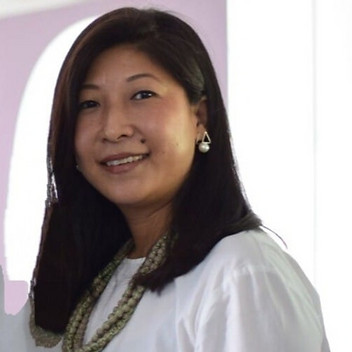
About Geetanjali
I am a…
Consultant, Educator/Teacher, Idea generator, Inventor, Life mentor
Bio
In a world where the pace of change often leaves young people unprepared for life beyond the classroom, I have chosen to work at the intersection of education, human development, and possibility.
What has truly defined my journey is being a self-learner. I began my career in soft skills training and grew into leadership roles in International Baccalaureate schools and management colleges. In each of these roles, I found myself asking: What if education could be designed not only to teach, but to empower?
For me, the classroom has never been just a place for information. I see it as a launchpad for identity, confidence, and purpose. That conviction led me to co-create inskills, a student-led soft skills program I designed with my partner, Maj. Dinesh Tiwari. inskills is not simply a program—it is a working model that proves when students are equipped with behavioral skills and guided in building self-image, they step into the world of work not only as job-seekers, but as confident, job-ready contributors.
Operating from a tier-two city, I have seen firsthand how access, geography, and confidence often limit opportunities for young people. Through my work, I have tried to build an ecosystem that nurtures potential, raises aspirations, and proves that talent is never bound by location.
I have also learned that real transformation does not come from teaching alone—it comes from listening, mentoring, and building on what learners already bring with them. My philosophy as an educator is simple: don’t try to “fix” students, but help them discover and amplify their own strengths. I believe soft skills and behavioral skills must be integrated into mainstream education, and every teacher must be trained in them. Only then can we create classrooms where confidence, communication, and character grow naturally alongside academics.
Through inskills, I have developed structured learning pathways that run parallel to academic courses, ensuring that skills like teamwork, empathy, and adaptability are not treated as optional but as essential. The model is built on practice-based learning, peer facilitation, and real-life application. I have seen shy students turn into leaders, hesitant learners find their voice, and graduates step into interviews with a newfound sense of self-assurance. These stories remind me every day why this work matters.
My mission is clear:
To prepare young people not just for jobs, but for life.
To ensure that confidence, communication, and character are seen as essentials, not extras.
To show that education, when designed to empower, can truly become the most powerful equalizer.
This is not a story of privilege—it is a story of persistence. I have chosen to build my vision in spaces where resources are limited but potential is immense. For me, the idea worth sharing is simple yet urgent: soft skills must no longer sit at the margins of education—they must stand at its center.
I'm passionate about
I am deeply passionate about bringing soft skills into the mainstream of education. For too long, education has been almost entirely focused on technical knowledge, academic scores, and subject expertise. While these are necessary, I have seen firsthand that they are not sufficient to prepare young people for the real world. What truly shapes a person’s success, confidence, and ability to thrive in life are the skills that are often overlooked—communication, adaptability, empathy, teamwork, and resilience. These are not “extra” skills. They are life skills, and they deserve to stand alongside mathematics, science, and languages in every classroom.
My passion comes from years of observing students. I have seen bright, intelligent young people struggle in interviews, falter in group discussions, and fail to express their ideas clearly, not because they lacked knowledge, but because they lacked confidence and basic communication skills. On the other hand, I have also seen average students, who were well-trained in soft skills, succeed remarkably—because they could collaborate, lead, and present themselves effectively. These experiences have convinced me that if we truly want education to prepare children for life, soft skills must be made a core part of it.
What excites me the most is the possibility of starting this shift early. Imagine children learning, from a young age, how to listen with empathy, resolve conflicts peacefully, share ideas clearly, and respect different perspectives. These qualities, when nurtured early, become part of a child’s natural way of being. By the time they step into higher education or the workplace, they are not just academically capable but also emotionally intelligent and socially confident.
But I believe the change cannot happen only at the student level. Teachers are the first role models, and they must be empowered with soft skills training before they step into a classroom. A teacher who practices empathy, patience, and effective communication automatically passes these qualities on to their students. In my view, every teacher training program must include soft skills as a mandatory component. Only then will classrooms become spaces where children not only learn subjects but also learn how to navigate life.
This passion drives everything I do. For me, mainstreaming soft skills is not just an educational reform; it is a social responsibility. We need future citizens who can think critically, work collaboratively, adapt to change, and lead with compassion. Technical knowledge may get a person a job, but soft skills help them sustain it, grow in it, and make a difference through it.
I am committed to spreading this idea and working towards a future where schools and colleges treat soft skills with the same seriousness as academics. My dream is to see soft skills embedded into the DNA of our education system so that every child grows up with not just knowledge, but also the confidence and character to use that knowledge meaningfully.
An idea worth spreading
When I look back at my journey with inskills, one realization stands out more than anything else: the earlier we start teaching children about soft skills, the stronger their foundation for life becomes.
For years, education has placed its weight on technical knowledge, grades, and degrees. These are, of course, important. But what I have witnessed time and again is that students who lack confidence, self-expression, adaptability, or empathy often struggle in real-world settings, no matter how strong their academic performance. This gap is not a small oversight—it is a fundamental missing piece in how we prepare the next generation.
My experience has shown me that soft skills cannot be treated as an optional add-on. They must be embedded into the very DNA of learning, starting from school itself. Imagine a child who, at the age of ten, learns how to listen actively, express ideas clearly, resolve conflicts respectfully, and collaborate in teams. By the time this child grows into a young adult, they carry not just knowledge, but also the confidence and emotional intelligence to navigate life and work.
But here lies the bigger insight: it is not just children who need to learn soft skills. Every teacher must first be trained in them. A teacher who communicates with clarity, empathy, and respect automatically transfers these qualities to their students. Teachers are the role models children unconsciously mirror. When teachers themselves practice soft skills, they create classrooms where students not only learn subjects but also life.
My idea worth sharing is simple but urgent: soft skills must be treated as essential life skills, taught early and taught by every educator. If we want confident, capable, and compassionate citizens tomorrow, we must start by training our teachers today.
The TED story
When I look back at my journey, one question keeps coming to me: Why are soft skills treated as optional, when they are actually the foundation of success?
Growing up, I saw how education revolved around marks, degrees, and technical knowledge. We celebrated test scores and academic brilliance, but communication, confidence, and collaboration were barely spoken about. They were seen as “extras”—nice to have, but not necessary.
Later, when I started working with students, the gap became clearer. I saw brilliant young minds who knew their subjects inside out, yet struggled to express ideas in interviews, to hold attention in meetings, or to manage conflicts in teams. They weren’t failing because they lacked knowledge. They were struggling because they lacked the skills to express, connect, and navigate the real world.
That realization was my turning point. I understood that if I wanted to contribute meaningfully, I had to work on bringing soft skills into the mainstream. I couldn’t change the entire education system overnight, but I could begin with small steps.
So I designed sessions that were not just lectures, but experiences. Activities, role plays, group challenges—anything that made learning simple, relatable, and practical. Over time, I saw transformations. Students who once avoided speaking up started leading conversations. The restless ones learned patience and listening. The ones who doubted themselves began to radiate confidence.
What touched me deeply were the long-term stories. Students would return months or even years later to say, “Ma’am, it was those communication activities that helped me crack my interview,” or “That one exercise you made us do taught me how to handle workplace pressure.” Those words were proof that the work mattered.
This journey is not about one single achievement—it is about persistence and belief. My TED story is about taking something that was undervalued, almost invisible, and showing its true power. Soft skills are not “extras.” They are essential life skills.
Imagine classrooms where students are not only taught equations and theories, but also how to communicate ideas, build resilience, lead with empathy, and collaborate across differences. Imagine graduates who step into the world not just with degrees, but with the ability to connect, influence, and inspire.
That is the vision I carry with me. My mission is to make soft skills an inseparable part of mainstream education. Because when education teaches you only what to think, it gives you half the picture. But when it also teaches you how to connect, communicate, and lead—it gives you the whole life.
This is my story. A story of persistence, small wins, and an unshakable belief that soft skills can transform not just careers, but people.
Things you might not know
People often see me as someone deeply invested in education, training, and building systems that nurture young people. What they don’t always realize is that I am equally good at connecting the dots between very different worlds—taking something that feels abstract, like “soft skills,” and turning it into something practical, measurable, and actionable.
I’m good at seeing hidden potential in people and situations. Many times, others overlook small details—like a student’s quiet strength, or a teacher’s untapped ability to motivate—and I notice them. I take pride in bringing that out in a way that feels natural, not forced. This ability has helped me mentor students and educators who initially lacked confidence but later flourished when given the right environment.
Another area people rarely know about is my strength in designing frameworks. I enjoy breaking down complex concepts into step-by-step methods so that others can apply them easily. It’s almost like translating a new language—one that makes ideas accessible to everyone.
I am also surprisingly good at listening between the lines. In conversations, I pick up on what people don’t say. That insight often allows me to guide them more effectively, whether it’s a student hesitant to share their fear, or a colleague unsure of their next step.
Most of all, people don’t know I’m good at persistence. I may not always talk about it, but I quietly keep working until things take shape. That’s probably why the projects I lead—especially around mainstreaming soft skills—keep moving forward, even when challenges arise.
In short, I’m good at turning overlooked abilities, ideas, and opportunities into strengths that create long-term impact.