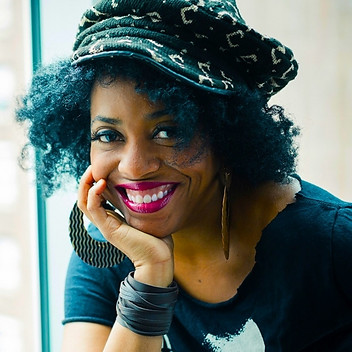
About Rhonda
I am a…
Artist, Change agent, Concerned citizen, Consultant, Educator/Teacher, Entrepreneur
Bio
Rhonda Ross is a Grammy-nominated songwriter, Emmy-nominated actress, Motivational Singer, and the creator of the Tune Your Inner Voice Self-Empowerment Program (TYIV) that helps people transform their self-sabotaging thoughts into internal power.
Fueled by the SONGTRA™ System for Emotional Sovereignty, TYIV is a groundbreaking method that fuses music, mindset science, and motivational psychology into a transformational 5-step system granting participants the ability to live free of being emotionally controlled by their circumstances.
The only child of global music icon Diana Ross and Motown founder Berry Gordy, Rhonda has carved out her own identity as a performer, educator, and thought leader. For more than 30 years she has captivated audiences on world-class stages such as Madison Square Garden, Radio City Music Hall, and Essence Festival, but her deepest impact lies in her ability to help people steady themselves from the inside out.
Her professional journey began as an actress, earning critical acclaim and an Emmy nomination for her role on Another World. She then pursued her first love, songwriting and performing, touring internationally and receiving a Grammy nomination. These accolades were hard won, however, filled with failure, setbacks and disappointments.
Her turning point came in 1999, during a dark season when she finally realized that she was letting circumstances outside of her determine her peace. She realized that she could reframe her inner soundtrack and take control of her own steadiness. That discovery became the seed of what she began to call ‘emotional sovereignty’ — the ability to govern one’s inner state no matter the external storm.
She started noticing that whether in the entertainment industry, in corporate spaces, or in everyday life, there were many people struggling with her same challenge.
It became her mission to to show them how to remain confident, calm, and authentic even in a world of relentless external pressure.
Rhonda created Tune Your Inner Voice, a workshop-based process inspired by Carol Dweck’s research on growth mindset and David Burns’s pioneering CBT methods. Unlike traditional therapy or mindfulness apps, TYIV is a DIY practice that empowers participants to create their own “songtras” — part song, part mantra — portable musical tools for immediate self-regulation.
Since 2021, SONGTRA has reached over 4,000 people across schools, wellness centers, and organizations worldwide, with 93% reporting improved mood and resilience. Participants describe it as transformative: a bookkeeper who felt more connected to her son, a PhD student who said it changed her life, a homeless mother who left motivated “to embrace life with renewed clarity and purpose.”
Rhonda’s mission is to make emotional sovereignty accessible and borderless. She envisions training 1,000+ facilitators across 35 countries and building a digital platform capable of reaching more than one million users in multiple languages. Her long-term goal is to establish emotional sovereignty as a cornerstone of leadership and well-being — taught as early as preschool and reinforced across professional and community settings.
Her commitment has earned recognition beyond the arts. She is the recipient of the WPIX11 Community Hero Award, the Star Leadership Award from Figure Skating in Harlem, and a Lifetime Achievement Award from the Pocono Mountains Film Festival. She serves on the Advisory Boards of Hearts of Gold, Figure Skating in Harlem, and the Motown Museum, as well as the Advisory Council on the Arts at Brown University.
At the core of Rhonda’s work is a belief that inner peace is not a luxury or an accident of fortune — it is a learnable skill. And when people learn to steady themselves, by themselves, they not only free themselves from victimhood, they stop passing pain forward. For Rhonda, this is the root of personal transformation and the seed of social change.
I'm passionate about
I am passionate about people knowing that their steadiness comes from within — that it is within their control — and that it doesn’t take a lifetime of therapy or a PhD to access it.
Too many of us are taught that internal peace is conditional: that it depends on how others treat us, whether life goes our way, or whether the world quiets down long enough for us to catch our breath. I’ve watched loved ones spiral into suicide attempts, and I’ve wept with parents whose children didn’t have the tools to self-regulate when life threw them curveballs. Those moments carved into me this truth: if we don’t learn to steady ourselves from within, the storms outside can sweep us away.
What moves me most is that the opposite is also true. When people realize they are not at the mercy of circumstance and that they are the ones holding the keys to their own emotions, something extraordinary happens. They not only stop outsourcing their peace, but they stop trying to control others as a way to soothe themselves. And from that place, they begin to lead differently, love differently, and live differently. This is what I call emotional sovereignty — and teaching it is my passion.
I want people to know that emotional sovereignty doesn’t have to be slow, mysterious, or reserved for the privileged few. On the contrary, it can be immediate, portable, and available to everyone. And when individuals understand that their steadiness is theirs to claim, the ripple effects are profound: families become safer, workplaces kinder, communities more resilient, and the world more compassionate.
This is my life’s work and it’s not optional for me. It is the through-line of my life, business, and career. I want every person to know: no matter what life throws at you, the key to your steadiness is not out there — it’s within. And once you know that, no one can take it from you.
An idea worth spreading
Most people believe our feelings are dictated by circumstances outside of us — other people, world events, or things we can’t control. My big idea is that outer circumstances don’t have to dictate inner peace. By rewriting the soundtracks in our minds, we can build what I call emotional sovereignty: the ability to feel steady, centered, and free regardless of what’s happening around us.
So much pain in the world comes from people trying to control others — subtly, covertly, or even violently — in the hope that it will ease their own suffering. But what if peace didn’t depend on anyone else changing? What if we could reduce suffering, for ourselves and for others, by learning to master the inner voice that drives our experience?
Emotional sovereignty is the inner steadiness that allows us to protect our calm when others throw their pain our way — and the autonomy that prevents us from making our own suffering someone else’s burden. When practiced at scale, this skill has the power to transform not only individuals, but entire systems.
The need for emotional sovereignty can no longer be ignored. The rise of apathy, the normalization of cruelty, the unchecked greed, and the rampant self-interest all stem from people who have lost their inner steadiness and lash outward in search of control. Without the tools to regulate ourselves, we absorb the chaos of the world and pass it along, fueling cycles of harm. But the steadier we become within, as individuals, the kinder, more empathic, and just our world can be as a collective..
Areas of expertise
Fusing Music and Personal Development Pioneering the Songtra™ System to help people Tune their Inner Voice to break free from societal, cultural, and organizational expectations and lead with steadiness, authenticity, self-trust and resilience., Mindset Transformation Coaching Teaching individuals and leaders how to achieve emotional sovereignty by shifting self-sabotaging thoughts into nourishing ones using practical frameworks (like CBT-based Songtra™ System)., Storytelling for Change Using humor, music, and narrative to help people reframe struggles as strengths and setbacks as springboards.
The TED story
In 1999, I hit a breaking point. I was sitting alone on a twin mattress on the floor of a tiny studio apartment in Los Angeles, sobbing after yet another fight with my husband. We had been trying to get pregnant for more than three years, and the nearly 3,000 miles between us wasn’t making that any easier. He hated LA. I couldn’t seem to get work anywhere else. And I couldn’t even get an audition, while my younger sister — who had started acting after me — had just booked the lead in a sitcom and was becoming a star.
I felt stuck, depleted, and humiliated. I had believed moving to LA was the only way to “make it.” Instead, I was unemployed, my marriage was strained, my dreams of motherhood felt further away than ever, and comparison was eating me alive.
A few years earlier, things had looked so different: I was newly married, working steadily as a singer-songwriter, and nominated for an Emmy for my role on a national TV show. Back then, I believed my star was rising. Now, it had crashed down in a thunderous boom — and I had crashed with it.
I tried everything I could to fix my circumstances. I called my agent, demanding auditions. He told me there just weren’t many roles for Black women my age. I snapped back, pointing to all the incredible women who were working: Regina King, Nia Long, Halle Berry. And that’s when he delivered the words that gutted me: “You are no Halle Berry.”
Those five words confirmed every fear and insecurity I carried about my worth. They took my breath away and left me flattened on that twin mattress, sobbing again. And in that moment, I realized something: my happiness was entirely at the mercy of circumstances I couldn’t control — the jobs, the agents, the marriage, the pregnancy. When they lined up, I was okay. When they didn’t, I was devastated.
But then, almost like a whisper, a new thought came: What would it feel like to stay emotionally steady no matter what? No matter what my agent said, no matter what Hollywood decided, no matter what noisy and opinionated circumstances came my way?
That question cracked me open. I began to wonder if it was possible to govern my own inner world instead of letting the outside world govern me. Could I really learn to be steady in the middle of the storm?
That was the beginning of my transformation. I started reading books on mindset, psychology, resilience like Viktor Frankl’s Man’s Search for Meaning and David Burns “Feeling Good”. I began experimenting with reframing my own thoughts, noticing the old and diminishing soundtracks playing on loop in my mind, and daring to replace them with new and empowering ones. And I discovered that my circumstances didn’t have to be what determined my peace.
That realization — that I could steady myself from within — changed everything. It didn’t make my life magically easy. But it gave me a foundation, an anchor. I called it emotional sovereignty: the ability to govern my inner world no matter what was happening in my outer world.
That moment on the mattress in 1999 became the hinge in my life. It turned despair into discovery. It gave me a truth that I now devote my life to sharing: You don’t have to tame your noisy circumstances. You just have to tune your inner voice.
Things you might not know
Here’s the deal….I’m incredible at Whack-a-Mole. You know that arcade game with the padded mallet and the mischievous little critters popping up at lightning speed? Put me in front of one of those, and no matter the situation or the competition, I am un-BEATABLE. I kid you not.
My secret? I don’t play the game the way most people do. Most people get locked into chasing one mole at a time — slam down here, dart over there, lunge forward, scramble back. It’s reactive, it’s frantic, it’s exhausting, and most importantly, it doesn’t work. But not me! I zoom out. I take in the whole board at once (all 9 or 12 mole holes), blanketing all the places from where the electronic animal might appear. Because of that wider awareness, no mole ever catches me by surprise.
Now, I know this might sound playful — even silly — but hidden inside this quirky skill of mine is a deeper truth about the way I move through the inner landscape of my world. Whack-a-Mole isn’t about speed (as most assume); it’s about perspective and awareness. It’s not about swinging harder or faster; it’s about stepping back far enough to see the entire system at play. That’s the part I’ve mastered — the ability to pause, zoom out, and recognize what is happening before it pulls me into chaos. And that ability has served me far beyond the arcade. It’s at the heart of how I live, lead, and teach.
Because, let’s be honest: life itself can feel like an adult version of Whack-a-Mole. You tamp down one frustration and another pops up. You calm yourself after one tough meeting and then a text from a family member sends your blood pressure soaring. You finally soothe your nerves after an unexpected setback, only to find yourself spinning with anxiety about what’s coming next. The fact is that if you try to handle life’s challenges one by one — scrambling from one trigger to the next — you end up exhausted, depleted, and still behind.
True steadiness comes not from playing faster and harder, but from changing your perspective of the game entirely. You don’t have to chase every mole; every irritable circumstance and uncomfortable feeling. Instead, train yourself to look at the full landscape of your thoughts and emotions and understand them and then shift what’s happening underneath the surface.
The way I see it, every “mole” on that board represents an Automatic Sabotaging Thought — what I call an AST. Those ASTs are the sneaky thoughts and narratives that pop up and knock us off balance. They sound like: “I’m not good enough,” “They’ll never take me seriously,” “I’ll never get this right,” or “Why even bother trying?” Left unexamined, they keep popping up in new disguises, and we spend our days frantically whacking at them (with myriad coping mechanisms), hoping for relief that never lasts.
But when you stop chasing and start observing, you begin to see that each mole is not a random note, but part of a larger soundtrack that you have on loop in your mind. And once you understand the songs on your soundtrack, you can rewrite them. That’s where my Songtra™ System for Emotional Sovereignty comes in. This 5-step process teaches how to recognize ASTs, shifting them into what I call INTs — Intentionally Nourishing Thoughts — and then anchoring those new thoughts with memorable tools that keep you steady and strong no matter where the next challenge pops up.
People laugh when I say I’m a whack-a-mole champion, but emotional reactivity is the adult version of that arcade game and we don’t have to live at the mercy of whatever decides to pop up next. You can’t win by speeding up, being reactive or working “harder”. The key is to widen your vision so you won’t be controlled by each new “mole”....in life as well as at the amusement park. So…. if you ever do find yourself in an arcade with me — let’s just say you’ve been warned.