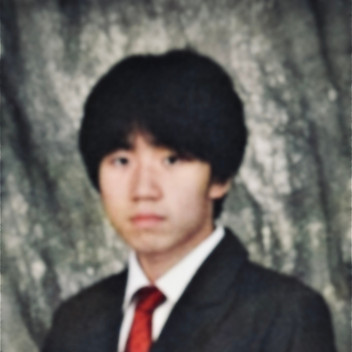
About Joe
I am a…
Student
Bio
-G11 students of the International High School in China Guangzhou city.
-Vice president and treasurer of South China Leadership Summit (club that takes charge of TEDx Talk.)
-TOP 10% in National level of National Economics Challenge (NEC)
I'm passionate about
There are few official public speaking platforms at school, and most of them are too competitive for students who don't have much experience in public speaking. The aspiration of winning has greatly overshadowed the thought of presenting one’s own convictions.
With the belief that everyone’s voice matters in mind, I'm passionate about providing more public speaking opportunities to the students in my school. Therefore, my friend and I are planning to organize the first TEDx Talk event at our school, shaping the school's public speaking events from the battleground of debate to a circle of shared voice.
An idea worth spreading
Nowadays, we are exposed to innumerable information due to the surge and rapid development of social media. Those pieces of information may be brought by the news, Instagram, TikTok, or YouTube. Even when we just glance at our phone, we can see some messages sent by different apps, instilling information into us. This is called information fragmentation. A mass of information we access on the internet—may be fascinating, surprising, funny, or sorrowful, way more than the information in reality—keeps irritating our brains, and makes our brains produce excess dopamine.
Since our brains will automatically long for dopamine, and social media can largely fulfill this requirement, sometimes it's hard for us to restrain from scrolling our phones. In other words, the stimulus of fragmented information is addictive. That is the basic principle of being obsessed with phones. People who have long been addicted to social media may have their density of gray matter in the orbitofrontal cortex and hippocampus of the brain to decrease, leading to poor impulse control and increased vulnerability to stress.
In this circumstance, we are not "accessing" the information but are "controlled" by it instead. So, in the education for the next generation, teaching how to filter and refuse information is more crucial than teaching how to gain information.
The TED story
I first got to know TED Talks when my teacher played one for us in AP CSP class. I remember clearly that it is about system bias, where the speaker shared how some facial recognition systems could only recognize people with certain skin colors. That made me realize technology is not always fair, and we need to be careful about how it’s used.
But what I love most about TED is not just the topics. It’s the way people from different countries and backgrounds can stand on stage and share their stories and ideas. Some are scientists, some are artists, some are just regular people—but they all have something valuable to say.
Listening to TED Talks makes me feel that everyone’s voice matters, and that’s the thing that I’ve always believed in. TED helped me see that even one idea can inspire change, and anyone can be the one to share it.
Things you might not know
My motto is "be the game changer, instead of the victim of circumstances". I'm apt at being the one who initiates change rather than settling for compromise. For example, I participated in an economic competition, and since the school doesn't provide any assistance for it, I finished it arduously with limited practice materials and guidance.
This experience motivated me to establish an economics club at school. I’ve invited our AP Economics teacher to serve as the club’s advisor and mentor. One of the main goals of this club is to better prepare students who want to participate in economics competitions. I'll walk students through the entire NEC process so they won’t feel lost after registering. I provide them with NEC practice problems and guide them to stay updated on current economic events.