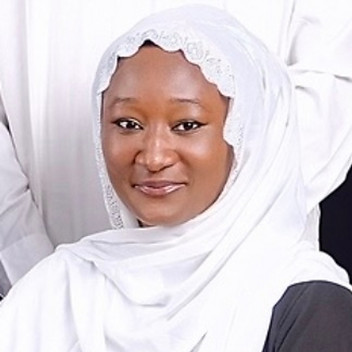
About Salmah
Bio
Dr Salmah is a doctor with a vision, a millennial doctor who knows the power of social media and wields it to help underserved and marginalized populations. She holds an MSc in International Public Health from the prestigious Liverpool School of Tropical Medicine (LSTM), graduating with Merit and a distinction from the University of Washington in project management. She hopes to leverage her academic and clinical expertise as well as her current role as a resident doctor to be a changemaker in global health especially in Africa.
As the founder of “Dr. Salmah’s Doctionary (DSD),” a social media platform (on Instagram, YouTube, and TikTok) where she breaks down complex medical concepts into simple, yet engaging content in English and Hausa, she has empowered individuals with information that can improve their health and well-being. As a result, she was invited to discuss medical topics of concern on two separate occasions. She participated in a radio program on “rape” organized by PLAN International and was also invited to be an instructor on a prestigious educational platform "Sapphital".
Additionally, Dr. Salmah has participated in several outreach programs including school health programs and community outreach programs (including immunization and health education campaigns) utilizing her skillset as a good storyteller. She also garnered experience and consequently passion for mentorship during her residency training while supervising the dissertation of final year medical students hence helping shape the next generation of doctors. All these reflect her deep passion for advocacy and public speaking.
She currently has an interest in advocating for the psychological well-being of healthcare workers. She recognizes the critical role of mental health in achieving overall wellness and hopes to use platforms like Tedx to advocate for that.
I'm passionate about
Demystifying medicine and empowering individuals with medical knowledge. Dr. Salmah is passionate about debunking myths and misconceptions about health, encouraging preventative measures, and fostering community participation in health promotion. Her goal is to make health education accessible and actionable, enabling individuals to take control of their well-being.
An idea worth spreading
""Saving Lives, Losing Ours: The Paradox of the Medical Profession""
"Why Does a Profession About 'Saving Lives' Ruin the Lives of the Saviors?"
This idea explores the hidden toxicity within the medical profession—the mental, emotional, physical, and financial toll on doctors and healthcare workers in general. Doctors are all about saving lives yet constantly have theirs in shambles.
Year after year National Institute for Occupational Safety & Health (NIOSH) compiles the list of jobs with the highest suicide rates.
According to Mental Health Daily:
Year after year, both dentists and doctors remain among the occupations with the highest suicide rates.
This isn't a startling statistic as the veil has been lifted, "medical practice isn't as rosy as advertised". There lies a great need to shed light on the systemic issues that undermine the well-being of these “saviors,”.A country's health care system can be an important factor in its development because health is both a result of and a contributor to development hence it's about time we had global conversations on how we can support those who dedicate their lives to saving others.
Areas of expertise
Community engagement, Content creation, Data analysis, Health Education, Medical Outreach, Medical Vlogging, Medicine, Mental health advocacy, Project management, Public health research
The TED story
"Doctors make mistakes. Can we talk about that?" By Dr. Brian Goldman. This TED Talk profoundly impacted me and inspired me to delve into the "why" and "how" behind the challenges in the medical profession. From my time in medical school through my internship and into my current role as a medical resident, I have come to understand the deep-seated reasons behind high dropout rates in medical practice, the alarming trend of brain drain, and the disturbingly high suicide rates among healthcare workers. These issues, compounded by frequent medical errors, negligence, and lawsuits, all point to a common theme: how well are "those who take care of others" taken care of themselves?
One haunting image stays with me—a pediatrician spending nights making children laugh and feel loved while handing out lollipops, only to return home to their child sleeping in an empty bed, deprived of a parent's presence and bond. This paradox is emblematic of the sacrifices ingrained in the medical profession. Similarly, we are acutely aware that the postpartum period poses the highest risk for depression, yet female doctors are often deprived of adequate support after childbirth. This not only compromises their mental health but also puts an undue strain on their families.
Equally troubling is the lack of empathy among doctors themselves. Senior medical professionals, who once endured the very struggles they now witness in their juniors, rarely step up to advocate for them. Instead of extending a hand of solidarity, they perpetuate a cycle of suffering, rooted in a culture of endurance and silence. This harsh reality made me question why systemic reforms have not been prioritized to address these issues. Why do institutions neglect the well-being of the individuals who form the backbone of healthcare delivery?
In this talk, I will expand on these themes by exploring the structural and cultural barriers within the medical profession, offering evidence-based insights into their implications for both healthcare providers and patients. I would also propose actionable strategies to address these issues, ranging from fostering a culture of empathy and wellness within medical institutions to introducing policies that support work-life balance and mental health resources for healthcare workers. By tackling these systemic problems, we can begin to reimagine a medical profession that not only saves lives but also preserves the well-being of its practitioners.
Things you might not know
• Writing captivating and informative content.
• Teaching and mentoring with an empathetic approach.
• Cooking diverse cuisines.
• Reading and understanding people’s emotions and needs.
• Mathematics and analytical problem-solving.
• Public speaking and facilitating workshops on health education and advocacy.
• Using storytelling to connect with diverse audiences and inspire change by weaving personal experiences with data, fostering empathy, and driving actionable solutions
• Leading impactful community health projects in underserved regions.