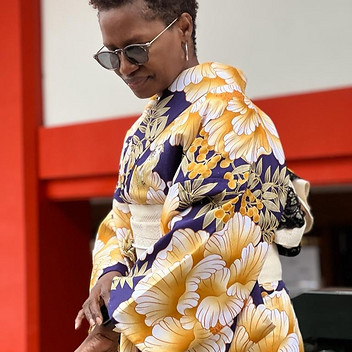
About Charlotte
I am a…
Architect, Brainstormer, Business leader, Change agent, Christian, Connector, Designer, Doctor, Engineer, Entrepreneur, Explorer, Global soul, Job-seeker, Parent, Single
Bio
Advancing safety, innovation, and human potential at global scale
Dr. Charlotte M. Farmer is a systems thinker, operator, and global leader working at the intersection of safety science, technology, and human progress. With more than three decades of experience across industry, government, and nonprofit sectors, she is driven by a singular belief: that innovation should make the world safer, more equitable, and more resilient for all.
As Senior Vice President and Chief Operating Officer of UL Research Institutes, Charlotte leads a global enterprise dedicated to advancing safety science in areas ranging from digital systems and advanced manufacturing to sustainability and societal well-being. She oversees complex operations, large-scale research infrastructure, and strategic partnerships spanning academia, industry, and government—helping translate breakthrough ideas into real-world impact.
Charlotte’s career has been defined by transformation. From scaling new ventures to turning around underperforming organizations, she has repeatedly stepped into moments of complexity and change—bringing clarity, discipline, and vision. Earlier in her career, she led major digital and operational transformations at The MITRE Corporation and Booz Allen Hamilton, and held leadership roles across engineering, manufacturing, and finance at Eastman Chemical. Across each chapter, she has focused on one core question: how do we build systems that work better—for people?
Beyond her executive leadership, Charlotte is an active voice in shaping the future. She collaborates with global leaders through the World Economic Forum and serves on multiple boards, including the U.S. Army Science Board, where she advises on emerging technologies and their implications for society. She is also deeply committed to developing the next generation of talent, serving as Board Chair of the National GEM Consortium, which advances diversity in STEM fields.
Charlotte is especially passionate about expanding access—whether through inclusive technology, education, or opportunity. As Board Chair of a mobility technology start-up, she has helped bring solutions to market that improve safety and independence for individuals with disabilities. Her work consistently reflects a broader purpose: ensuring that innovation reaches and benefits those who need it most.
Trained as a chemical engineer with a doctorate in systems engineering, Charlotte brings both analytical rigor and human-centered perspective to her work. She has been recognized as one of the Most Influential Black Executives in Corporate America and inducted into the Black Engineer of the Year Hall of Fame.
At her core, Charlotte is a builder—of systems, organizations, and pathways for others to thrive. She believes that the challenges facing the world today require not only technological advancement, but also courage, collaboration, and a deep commitment to the greater good.
She lives in Chicago and finds joy in traveling, lifelong learning, and spending time with her three adult sons.
I'm passionate about
Building systems that protect and elevate humanity at scale. My work is not simply about operations, strategy, or leadership—it is about solving consequential problems that matter to billions of people. At my core is a deep commitment to advancing safety science, societal resilience, and human well-being in a world being reshaped by technology, climate pressures, and global complexity.
A central theme in my work is **trust**. I believe trust is one of the most valuable currencies in business and in society. Institutions, markets, and communities function only when trust is earned, protected, and continuously reinforced. I am passionate about helping organizations build credibility through transparency, scientific rigor, operational excellence, and ethical leadership. When trust is strong, innovation accelerates, collaboration flourishes, and societies thrive.
I believe that the greatest challenges of our time—energy transition, digital safety, infrastructure resilience, and public health—require institutions that are both scientifically rigorous and operationally excellent. I am driven to transform organizations into globally respected engines of discovery and impact. Incremental progress is not enough; I strive to build institutions known for breakthrough insights, trusted authority, and lasting influence.
I am equally passionate about scaling impact through structure. I am energized by designing operating models, governance systems, and strategic frameworks that turn vision into measurable outcomes. Whether shaping a multibillion-dollar enterprise, guiding board-level decisions, or building new research campuses, I focus on aligning people, capital, and purpose to achieve outsized results. I believe excellence is not accidental—it is designed, disciplined, and sustained.
I care deeply about people and potential. I am committed to creating environments where exceptional talent can thrive—where scientists, operators, and leaders are empowered to do their best work in service of a greater mission. This includes recruiting and developing world-class talent, fostering cultures of curiosity and accountability, and creating pathways for others to grow and contribute meaningfully. My leadership is grounded in stewardship—of people, purpose, and possibility.
A defining part of my work is **generational succession planning**. I focus on anticipating future global needs and ambitions—often before they are fully visible—and ensuring that the next generation of leaders is prepared to meet them. I am intentional about identifying the critical skills, mindsets, and interdisciplinary capabilities required to solve emerging challenges. To me, succession is not a handoff; it is a deliberate, forward-looking design of leadership continuity that sustains impact across decades.
My passion is also personal. Through the Derek Farmer Foundation and my commitment to lifelong learning, I work to expand access to knowledge and opportunity across generations. I believe education is transformative, and I am driven to create systems that enable individuals—regardless of age or background—to continue learning, evolving, and contributing to society.
I am committed to engaging on the global stage to help shape the future. Through international forums and leadership communities, I contribute to and learn from the world’s most pressing conversations. My “push, pull, position” philosophy reflects how I approach leadership: advancing ideas and impact, gathering insight, and ensuring a seat at the tables where decisions are made.
Ultimately, I am motivated by legacy. I want to build institutions, ideas, and initiatives that endure—work that continues to serve humanity long after my direct involvement. My aspiration is to lead at the intersection of mission, scale, and global relevance, creating meaningful and lasting impact.
At the heart of everything I do is a simple but powerful belief: I am here to create meaningful, scalable, and enduring impact in service of humanity—through leadership, innovation, disciplined execution, trust, and the intentional development of future generations who will carry that mission forward.
An idea worth spreading
As leaders engage with the World Economic Forum, we reflect on the broad challenges affecting our world, particularly those related to safety.
Just this past November, the world’s population crossed the mark of 8 billion people. For my colleagues and me, this milestone signifies the urgency of solving the human safety crisis facing our growing population.
At UL Research Institutes, we are committed to addressing three grand challenges that summarize many of the greatest human safety threats facing our global population today — challenges that only increase as our population grows. Let me explain.
Grand Challenge #1 — Resilience for a Sustainable Future
Resilience for a Sustainable Future
Environmental pressures, especially those driven by global climate change, pose increasing risks to urban and rural environments. Wildfires, flooding, and severe weather events are occurring with greater frequency and severity. Innovations designed to mitigate such risks, e.g., renewable energy technologies and associated energy storage systems, have enormous potential but pose challenges of their own in the early development stages. UL Research Institutes is committed to bringing a safety science perspective to the design, development, and deployment of engineered technologies and practices to ensure that innovation is created with safety outcomes in mind, thereby ensuring a resilient and sustainable future.
One way we are tackling this challenge is through the work of research engineers Joseph Willi and Gavin Horn of our Fire Safety Research Institute (FSRI). Their research is helping us learn about structure-to-structure fire spread in the Wildland Urban Interface (WUI). By characterizing the ignition potential of common construction materials exposed to energy from adjacent homes or intermediate fuels such as cars, sheds, or decks, we can take collected data and quantify building-to-building fire spread mechanisms, develop improved computational fire models, and create insights into control measures that can reduce this risk in WUI communities around the world.
Grand Challenge #2 — Individual & Societal Health in the 21st Century
Individual & Societal Health in the 21st Century
Humans have dramatically changed the planet’s overall environment so much that experts have declared the current era the Anthropocene, or the age of humans. The same technologies that enable us to pursue modern lives have had negative effects on measures such as air quality, water quality, and more general societal well-being. UL Research Institutes is committed to using the tools of toxicology, analytical chemistry, and public health to assess how manufactured products and technologies impact human health and safety.
So, what does that mean to the average world citizen? The work we have done in our Chemical Insights Research Institute (CIRI) sheds some light on the impact of chemical exposure in the built environment and its potential to affect health. Air pollution leads to about 7 million deaths per year and volatile organic chemicals (VOCs) can lead to respiratory disease and cancer.
A comprehensive assessment of indoor and outdoor air pollution in India during summer and winter months identified 69 specific volatile VOCs in the indoor air with 42% deriving from the use of plastic materials. Levels are higher in the summer months when increasing temperatures means increased outgassing of chemicals. Only by characterizing the threat can we develop ventilation and other mitigation strategies.
Grand Challenge #3 — Safety at the Human-Digital Interface
Safety at the Human-Digital Interface
Few technologies have developed as rapidly as those associated with the digital revolution of the last half-century. Machine learning, artificial intelligence, automation, and a worldwide communications network have enabled digital systems to manage increasingly complex systems and processes. When those processes interface with people, it is critical that they be designed to be safe, secure, and equitable. Our Digital Safety Research Institute (DSRI) is committed to ensuring that the digital future is built with human safety principles in mind.
With so many challenges facing us today, how do we prioritize our efforts to have an impact? When I speak with Dr. Chris Cramer, our chief research officer, he has this to say: “At UL Research Institutes, we know that solving a global problem takes global effort.”
For our part, we invest in people and facilities to ensure that we deliver excellence in research solutions that target our grand challenge commitments, and we vigorously engage with partners across the public and private sectors to leverage our strengths and ensure that our work is relevant, timely, and ideally — groundbreaking. We’re proudly striving to revolutionize the science of safety – for the benefit of our planet and its 8 billion citizens.
The TED story
My TED story is rooted in a simple but transformative idea: **agape love**—a selfless, enduring commitment to the well-being of others—is not just a moral ideal, it is a powerful force for leadership, innovation, and lasting impact. For much of my life, I did not have language for what was guiding me. I simply knew that I was drawn to work that served people, protected lives, and created opportunities for others to thrive. Over time, through both joy and profound loss, I came to understand that what was anchoring me was agape love—the kind of love described as patient, kind, not self-seeking, and enduring through all things. It is a love that does not depend on recognition or reciprocity; it is a choice, a discipline, and a way of being.
My late husband embodied this kind of love in a way that shaped my life indelibly. Through our 35 years together, I experienced what it means to be fully supported, deeply respected, and genuinely seen. When he passed, I faced a profound question: how do I carry forward that kind of love in a world that often rewards speed, scale, and self-interest? The answer became my life’s work. I realized that agape love is not passive—it is active. It shows up in how we lead, how we build institutions, how we make decisions, and how we choose to serve others, especially when it is difficult.
In my professional life, this has meant leading with purpose beyond profit, and designing systems that prioritize human safety, dignity, and trust. I have come to believe that love and trust are deeply intertwined—that trust, often described as the currency of business, is actually built on consistent acts of care, integrity, and accountability. When leaders operate from a place of agape love, they create environments where people feel valued and empowered, where ideas can flourish, and where innovation is grounded in responsibility. This is not soft leadership; it is disciplined, intentional, and often requires the courage to make decisions that serve the long term over the immediate.
Agape love has also shaped how I think about the future. It calls me to invest in the next generation—not just by preparing them for the world as it is, but by equipping them to shape the world as it should be. This is why I am passionate about generational succession planning: anticipating what humanity will need decades from now, identifying the skills and mindsets required, and helping to cultivate leaders who are both capable and grounded in purpose. To love at this level is to think beyond oneself, to design for continuity, and to ensure that what we build endures.
Through my philanthropic work, particularly the Derek Farmer Foundation, I have sought to translate agape love into expanded access to education and lifelong learning. I believe that one of the greatest expressions of love is creating opportunity—opening doors that allow others to grow, contribute, and realize their potential. Education is not just about knowledge; it is about empowerment, dignity, and the ability to participate fully in society.
What I have learned is that agape love is not abstract—it is deeply practical. It shapes how we respond to conflict, how we allocate resources, how we treat people when no one is watching, and how we define success. It asks us to lead with humility, to listen deeply, to extend grace, and to act with intention. It challenges us to move beyond transactional relationships and toward transformational impact.
My TED story is ultimately an invitation: to reconsider the role of love in our lives and our leadership. What if love—selfless, enduring, disciplined love—was not something we reserved for our personal lives, but something we intentionally embedded into our institutions, our strategies, and our decisions? What if we measured success not only by what we achieve, but by how we uplift others along the way?
I believe that when we lead with agape love, we unlock a different kind of power—the power to build trust, to inspire others, and to create systems that truly serve humanity. And in a world facing complex and interconnected challenges, that kind of leadership is not only needed—it is essential.
Things you might not know
People are often surprised to learn that I am exceptionally good at **seeing patterns and possibilities long before they become obvious to others**. While my professional roles have centered on leading large organizations, building research enterprises, and shaping strategy at scale, one of my most natural abilities is connecting seemingly unrelated ideas, signals, and people to form a clearer picture of what the future may require. I instinctively scan across disciplines—science, technology, economics, geopolitics, culture—and synthesize insights into practical action. This ability helps me anticipate emerging needs, identify opportunities others might miss, and design systems capable of delivering meaningful outcomes over decades rather than quarters. It also fuels my deep interest in **generational succession planning**: thinking carefully about the capabilities, mindsets, and leadership qualities that the next generation will need to address challenges we can already sense on the horizon.
People also do not always realize how much I enjoy **building things from the ground up**—not just organizations, but frameworks, operating models, and environments where talented people can do their best work. I find real joy in taking complex systems and bringing clarity to them. Whether it is designing governance structures, aligning teams around a shared mission, or turning ambitious ideas into executable strategies, I thrive on creating order out of complexity. Many people assume operational excellence is about discipline alone, but to me it is also creative work. It requires imagination to envision how systems can function better, how institutions can earn and sustain trust, and how innovation can be translated into real-world impact.
Another thing people may not expect is how much I value **deep listening**. Leadership often appears outward-facing—speaking, directing, presenting—but some of the most important insights come from listening carefully to scientists, engineers, policymakers, operators, and community members who see problems from very different vantage points. I have learned that when people feel heard, they bring forward ideas and perspectives that can transform an initiative or an organization. Listening is also how I build one of the principles I care most deeply about: **trust**. I believe trust is the most important currency in business and society. It is built slowly through consistency, transparency, and integrity, and once earned it creates the conditions where collaboration and innovation can flourish.
On a more personal level, people may not realize that I am also quite good at **mentoring and encouraging others to see their own potential more clearly**. I enjoy helping individuals connect the dots in their own careers, recognize strengths they may underestimate, and step into opportunities that stretch them. Watching someone grow into a leader, a scholar, or a changemaker brings me enormous satisfaction. It is one of the reasons I care so deeply about education, lifelong learning, and creating pathways for others to develop their capabilities over time.
Finally, people might not know that beneath the strategic planning and executive responsibilities, I carry a strong sense of **optimism about humanity’s ability to solve big problems**. I have spent much of my career working on issues that affect billions of people—safety, infrastructure, technology, and resilience—and those challenges can sometimes feel overwhelming. Yet I have seen what becomes possible when talented people are aligned around a meaningful purpose. I am good at holding that long view: recognizing both the complexity of the challenges we face and the extraordinary capacity we have to address them when we combine curiosity, courage, collaboration, and trust.
In many ways, the skill people do not always see is my ability to **bring together vision, systems thinking, and human connection**. I work to translate big ideas into structures that work, to turn ambition into action, and to create environments where individuals and institutions can contribute to something larger than themselves. That combination—seeing patterns, building systems, cultivating trust, and helping others realize their potential—is what quietly fuels much of the work I do every day.