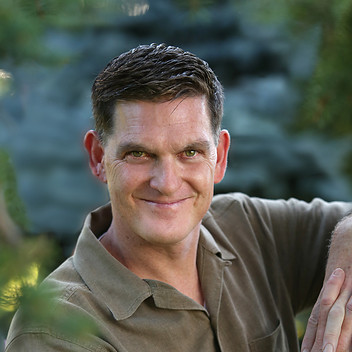
Scott Sampson
President & CEO at Science World British Columbia
TED Attendee
Vancouver, British Columbia, CanadaAbout Scott
I am a…
Brainstormer, Change agent, Connector, Environmentalist, Idea generator, Parent, Scientist, Writer/Editor
Bio
Scott Sampson is a dinosaur paleontologist, science communicator, and passionate advocate for reinventing cities as places where people and nature thrive. He serves as President & CEO of Science World British Columbia. He is perhaps best known as “Dr. Scott,” host and science advisor of the Emmy-nominated PBS KIDS television series Dinosaur Train, produced by the Jim Henson Company. His scientific research has focused on the ecology and evolution of dinosaurs, and he has conducted fieldwork in many countries, including Kenya, Zimbabwe, South Africa, Madagascar, Mexico, the United States, and Canada. He has published numerous scientific and popular articles, and he regularly speaks to audiences of all ages on topics ranging from dinosaurs and education to sustainability and nature connection. Sampson is author of Dinosaur Odyssey: Fossil Threads in the Web of Life (University of California Press, 2009) and How to Raise a Wild Child: The Art and Science of Falling in Love with Nature (Houghton Mifflin Harcourt, 2015). Much of his time is currently spent co-creating a large-scale learning ecosystem in British Columbia focused around STEAM (Science, Technology, Engineering, Art & Design, and Science).
I'm passionate about
Rethinking education
Connecting people with place.
Rethinking cities as thriving places for people and nature.
Reinventing museums and science centers as agents of social change.
An idea worth spreading
Today, we still equate education with schools. Yet, in part thanks to the digital revolution, a growing movement to integrate classrooms with communities has potential to transform education and, in doing so, address several major societal challenges—among them the personalization of learning, the talent gap caused by the growth of a knowledge economy, and the sustainability crisis. The pathway to achieving this ambitious goal is learning ecosystems, cross-sector collaborations that allow organizations—K-12 schools, higher education, non-profits, corporations, and government—to leverage one another’s assets to achieve a dramatic increase in scale.
Areas of expertise
Dinosaur Paleontology, Education, Evolutionary Biology, Nature Connection, Science Centers & Museums, Science Communication
The TED story
I was born and raised in Vancouver, B.C., where “paleontology” became one of the first words I learned to spell. So becoming a professional dinosaur paleontologist fulfilled a childhood dream. However, in 2007, I resigned from a tenured faculty position at the University of Utah to spend the bulk of my time writing, speaking, and working on media projects aimed at science communication. This move was triggered by the realization that we have to make a drastic, and rapid, cultural course change. Today I see the disconnect between people and the places they live as one of the most pressing and overlooked issuesy. Bridging this divide will look different for each place, each city, requiring a rapid scaling of place-based literacy. I recently completed the first how-to book on nature connection, “How to Raise a Wild Child.” Through my work at Science World British Columbia, I am now working to co-create a cross-sector learning ecosystem with the potential to transform education by merging classrooms with communities.
Things you might not know
Forging collaborations.
Rethinking the intersection of nature and culture.
Creative use of media.