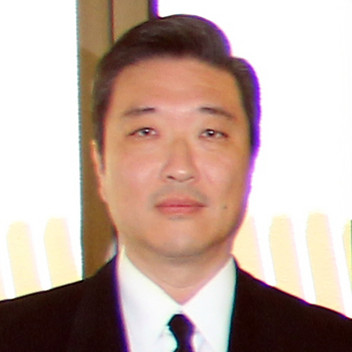
About Charles
I am a…
Artist, Brainstormer, Connector, Environmentalist, Explorer, Global soul, Idea generator, Musician, Philanthropist, Scientist
Bio
I am a synergist of people and of information. Though much of this is done for business and finance, the major focus of the synergistic endeavors is in the creation of knowledge. I have professional background in music composition and performance (piano, guitar, flute, clarinet, violin), industrial software development and architecture, real estate, microchip design, internet application design and security, sports biomechanics consulting, computer game development, neural-computation research, in addition to business start-ups and equities trading. In my spare time, I conduct research in the philosophy of art and science along with the nature of consciousness/personal identity.
I have always had manifold interests from an early age. In grade school, I read every volume of the World Book Encyclopedia, including every volume of their Science and Invention Encyclopedia. I quickly discovered that some of the new knowledge I acquired would resonate with existing knowledge in disparate fields. This addicting resonance would occur with more frequency as I mature and acquire more knowledge.
I received Bachelor’s degrees from USC in Biomedical Engineering and in Electrical Engineering. My graduate studies were focused on developing the knowledge to integrate wetware with hardware (microchips embedded in brains) and to someday transfer human consciousness onto microchip. My research took me from the psychological and neurobiological source of personal identity to computational neural intelligence. Although bringing together professors in psychology, biomedicine, electrical engineering, and philosophy was quite difficult at the time, my Ph.D. studies was cut short when I took part in a mass walk-out of doctoral candidates in protest of a mandatory vivisection class. My consolation prize was a Master of Science in Biomedical Engineering (long since misplaced in a packing box).
Out of academia, I went into computer game design and programming to make a living, but continuing my research in my spare time. It was during this time I was exposed to Westernized popular Buddhism and the lectures of Alan Watts, Osho, etc. I was struck by how ancient ideas could be dusted off and streamlined to fit scientific knowledge. I was also acquainted with the works Joseph Campbell, which will be useful 15 years later when I research the philosophy of art and the primal significance of story.
My minor in Music Theory and Composition was a result of a deep love for music from early childhood. A large part of my research into artificial neural intelligence is how such a mind would be able to create works of art. This research took me into finding out what is the very essence of art, and how art becomes significant. It was a surprise that the results of this research fit so well with my ideas concerning knowledge and science.
With my many activities and interests, from business and finance, to gaming, to music, to science, and to consciousness, I am continuously delighted by how they all seem to somehow connect. Although all the questions I have researched have been asked many times before, my broad base of interlocked knowledge allows me to be the explorer who brings a deep understanding of the underlying connection of such a wide range of disciplines. I feel that in this age of super-specialization in myriad fields, the discovery of unifying connections becomes increasingly important. Life, knowledge and consciousness can indeed be one grand work of art.
I'm passionate about
Currently, I am fascinated with the dynamics of ideas: their flow. How do memes travel across interconnected minds? Nowadays good ideas easily mix with the toxic. Will bad ideas eventually prevail?
An idea worth spreading
Get more kids in STEM: change the focus of science education from memorizing the fruits of science to how the fruits are made.
Since most scientists learned science implicitly, few can tell you why or how science works.
Science is not rigid or strict, but alive, dynamic, and founded upon responsible guessing.
How to guess responsibly? Use Occam’s Razor!
Why would science be better than any other form of guessing? Mathematically, every “complication” introduced into a guess increases the number of new statements it makes about reality. The more it says about reality, the more likely it will be wrong. Did the pencil fall because of an attractive force between it and the ground? Or was it because of an invisible pencil fairy named BillyBob wearing purple and white polka dot shoes? Occam’s razor tells us to go with the simpler guess since that is less likely to be further from reality. "Scientific method" was invented by a textbook writer, and doesn't exist.
Areas of expertise
Cognitive Neuropsychology, Music Cognition, Music Composition, Performance and Production, Neural computation, Philosophy of Art, Philosophy of Science, Sports Biomechanics, Story Architecture, Trading and Investing, Trans Pacific Business
The TED story
I have often used TED videos in my after school activities classes, which range from getting kids interested in STEM to teaching them the fundamentals of finance. I couldn’t even count how many talks have moved and inspired me personally. It would be such a great honor to be able to contribute to the incredible resource that I have drawn upon and that has affected me so much.
Things you might not know
I’m a successful hitting (baseball) coach and give terrific neck/back rubs (to my wife, not the young players). I’m a venerated old school D&D Dungeon Master. I'm a good teacher.