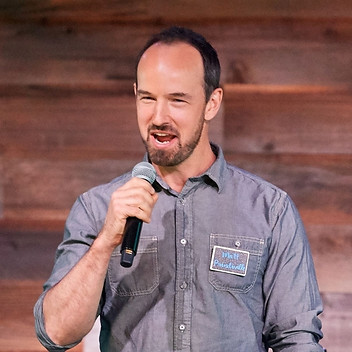
Matt Prindiville
Chief Solutioneer and CEO at UPSTREAM
TED Attendee
Rockport, Maine, United StatesAbout Matt
I am a…
Activist, Athlete, Blogger, Brainstormer, Business adviser, Business mentor, Change agent, Connector, Environmentalist, Event planner, Foodie, Idea generator, Marketer, Musician, Parent, Producer, Social entrepreneur, World traveler, Writer/Editor
Bio
I’m a 20-year environmental solutioneer, lifelong seeker, struggling self-actualizer and all-around adrenaline junkie. I’m passionate about collaborating to solve big problems - especially around ideating and catalyzing better systems and norms to help the planet and its inhabitants thrive.
Over the first 10 years of my career, I served as a strategist, lobbyist, organizer and communications lead for various environmental, social and political causes, coalitions and campaigns.
But I found my dream job in 2011 when I joined Upstream - a national non-profit sparking innovative solutions to plastic pollution and our current throw-away culture. I took over as CEO in 2015, and now I primarily work as a content creator, spokesperson, business development / brand strategist, executive leader, fundraiser and relationship cultivator.
I’ve had the good fortune to work within and for the climate, environmental health, product stewardship, plastic pollution and zero waste movements. I helped found the global Break Free from Plastic Movement, the Cradle2 Coalition and the Make It Take It Campaign. And I helped establish and advance the Electronics Takeback Coalition, the Multi-State Mercury Campaign, and Safer Chemicals and Healthy Families Coalition where I worked on dozens of successful legislative policy campaigns.
In the last several years, I’ve advised the United Nations Environment Program on their plastic pollution strategies and written for the Guardian, GreenBiz, and Sustainable Brands among other publications. My work has been featured in the Economist, the New York Times, Fast Company, on NPR’s 1A, and Jack Johnson’s Smog of the Sea film among others.
As a fundraiser, I’ve helped raise more than $8 million dollars over the last 10 years and directed UPSTREAM’s resources to creating an outsized impact for an organization our size (10 person team; $1.5M budget).
One of my talents is being able to take complex ideas and break them down into accessible, inspiring stories for policymakers, business leaders, and everyday solutioneers to grasp and move forward. I'm also a "bootstrappism" practitioner and have figured out how to do all kinds of challenging things without a lot of help or money.
I spend my free time with my family in midcoast Maine, where I’m mostly found in the ocean surfing, in the mountains snowboarding, or chasing kids around a basketball court as “Coach Matt.” I look forward to connecting and creating with you.
I'm passionate about
I’m passionate about collaborating to solve big problems - especially around ideating and catalyzing better systems and norms to help the planet and its inhabitants thrive.
I'm also crazy about my wife and kids (and dog :), and surfing once or twice a week in the cold Northern Atlantic Ocean is my happy place (with snowboarding in the Maine mountains a close second :)
An idea worth spreading
The New Reuse Economy - I want you to think about the last time you ordered take-out for dinner or got a meal delivered to your house. And I want you to think about all of the single-use products that you got with your order - the bags, the takeout containers, the plastic utensils wrapped in more plastic, the ketchup packets, the napkins. It’s crazy, right?
Our friend Tom Sietsema, who’s the food critic for the Washington Post back in the US, used to go to restaurants all the time before Covid. But once the pandemic set in, he started ordering all the food to be delivered to his home. And he decided to conduct an experiment, and he saved all of his to-go food packaging over the course of three weeks, and when he spread it all out, it literally covered his entire lawn. I believe he said that one meal for two people had like 26 different single-use throw-away items in it. And this is our current normal. This is the way it’s done 99.9 percent of the time in the United States and around the world.
It’s also the normal for how we get most of our beverages and most of the stuff we buy at the grocery store or order online. One way-throw-away single-use packaging. And depending on which bin we put it in, it’s either sent to a landfill, or an incinerator, or hopefully if it has some value - it’s sent to a recycling facility where it’s eventually sold as a commodity in the global marketplace (which has its own set of environmental impacts). And of course, a lot of it winds up in the environment as pollution. And these actions happen billions of times a day by billions of people - 365 days a year. And when you think about it, it’s a staggering amount of oil, trees, metals and other natural resources - all for the ephemeral act of having a bite to eat or drinking a drink or carrying out some groceries.
And with all the attention paid to single-use plastic, there are a lot of commercial interests advocating for single-use “something else.” “Don’t use plastic, use my disposable product - it’s made from paper, or aluminum, or bioplastic.” But the science tells us that when we trade single-use plastic for single-use something else, we’re just trading one set of environmental problems for others. We may not have plastic in the environment, but now we’ve got more climate pollution, or we’re cutting down more trees or using more toxic chemicals.
But the good news is that reuse beats single-use every time - especially for the climate. The life cycle assessments are clear about this. And the really good news is that if we can figure out how to get people what the want and need in ways that don’t generate any waste in the first place, not only will we have done a great thing for the environment, but we will also save businesses money, save towns and taxpayers money from not having to pay for all the solid waste costs and litter cleanup costs. And also we’re going to create all kinds of opportunities for entrepreneurs and investors to help ideate, create and accelerate this new reuse economy.
So what does this new reuse economy look like.? Well... this is an economy that is built around the question of “how can we get people what they want and need without all the waste?” And the reality is that a huge portion of this one-way, throw-away, single-use packaging can be completely replaced by reuse systems and services. Essentially developing systems that look at packaging not as a product but as a service. Because we don't want the package. We want what's in it. So what does that look like? Well, since we were just in the imagination session, I want you to imagine your favorites city square... 10 years into the future, and I want you to look around, and as you look around, you going to start to notice some things:
* First, everyone dining out at restaurants is eating off real plates and cutlery, and drinking from real cups.
* To-go coffee is served in reusable cups loaned from a reuse service providing clean, sanitized cups to coffee shops.
* Restaurants, grocery stores and delis use services that provide them with clean, sanitized reusable to-go containers for prepared food, takeout and delivery.
* At the ballpark, everyone is drinking beer out of real cups. And touch-free soda fountains dispense drinks in reusable cups after you put in your credit card.
* You can order groceries, cleaning and personal care products, and even clothing delivered to your home in reusable containers, totes or mailers.
* Tens of thousands of people are employed throughout the area in delivery, pick-up, cleaning, stocking and logistics.
* Litter and solid waste costs are down and community pride is up.
None of these innovations required you to bring your own anything. * People got tired of single-use waste. And entrepreneurs said we can do it better. Community leaders and policymakers worked to create the conditions for this thriving reuse economy. Then the big companies saw this was the future and everyone started doing it.
Areas of expertise
Container deposit systems, Content development, Extended producer responsibility, Facilitation, Fundraising, Grassroots organizing, Lobbying, Marketing, Network building, New reuse economy, Organizational and business development, Plastic pollution, Podcasting, Product policy, Product stewardship, Public speaking, Research and writing, Reusable packaging systems, Zero waste