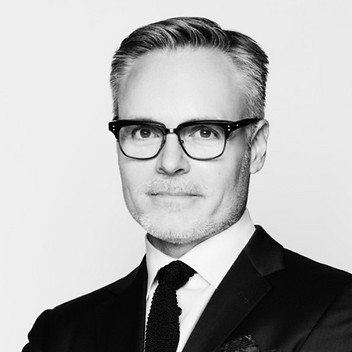
Eric Daimler
Chair, CEO, & Co-Founder at Conexus
TED Attendee
San Francisco, California, United StatesAbout Eric
I am a…
Educator/Teacher, Entrepreneur, Idea generator, Investor, Technologist
Bio
Dr. Eric Daimler is an authority in Artificial Intelligence with over 20 years of experience in the field as an entrepreneur, executive, investor, technologist, and policy advisor. Daimler has co-founded six technology companies that have done pioneering work in fields ranging from software systems to statistical arbitrage.
Daimler is the author of the forthcoming book "The future is formal: The roadmap for using technology to solve society’s biggest problems." A frequent speaker, lecturer, and commentator, he works to empower communities and citizens to leverage AI for a more sustainable, secure, and prosperous future.
As a Presidential Innovation Fellow during the Obama Administration, Daimler helped drive the agenda for U.S. leadership in research, commercialization, and public adoption of AI. He has also served as Assistant Dean and Assistant Professor of Software Engineering in Carnegie Mellon’s School of Computer Science. His academic research focuses on the intersection of Machine Learning, Computational Linguistics, and Network Science (Graph Theory). He has a specialization in public policy and economics, helped launch Carnegie Mellon’s Silicon Valley Campus, and founded its Entrepreneurial Management program.
A frequent keynote speaker, he has presented at venues including the engineering schools of MIT, Stanford, and Harvard. Daimler studied at Stanford University, the University of Washington-Seattle, and Carnegie Mellon University, where he earned his PhD in its School of Computer Science.
I'm passionate about
Emergent Compositional Systems. This is the future that enables the flexibility, scalability, and safety required of increasingly complex systems.
An idea worth spreading
Calculus is the math of the 19th Century. It is the math of machinery and a physical world. For our digital future, we need to orient ourselves around Category Theory. We might say the more the better, but if forced to choose, I would reduce the emphasis of Geometry, Trigonometry, and Calculus. The future will be dominated by Statistics, Probability, and Category Theory.
Areas of expertise
Category Theory, Computational Economics, Computational Knowledge Graphs
The TED story
First attended in 2006.
Things you might not know
Parallel Parking.