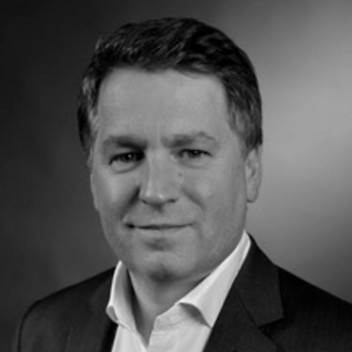
About Justin
I am a…
Activist, Concerned citizen, Connector, Parent
Bio
Justin has dedicated his life to combatting poverty and injustice - from the campaign against apartheid in South Africa to working for two UK Prime Ministers, as an Assistant Secretary General of the UN, Deputy Head of UNICEF, and with Save the Children and Oxfam.
Learning from his failures as well as from his successes, Justin has pioneered new communications and advocacy strategies to build unusual coalitions for change, including Make Poverty History and World Children’s Day. His current focus is on building a radical collaboration of business, faith, sport and civil society to inspire a billion people to act on climate change - The Count Us In campaign.
Today, Justin lives in London with his wife Lisa and two young boys. He is a passionate football fan and, having started his work life as a chef, loves cooking and food.
I'm passionate about
Arsenal and my family
An idea worth spreading
The Global Farm Metric. The Sustainable Food Trust (SFT) with over 50 partners from WWF to Tesco has developed an internationally harmonised framework for measuring farm and food system sustainability. It could be a game changer in speeding up the much needed transition to more sustainable food and farming systems, giving power to farmers, consumers, governments and businesses to make the right choices.
At present, there is a lack of a common means for assessing the sustainability of food and farming systems across the world. Taking the mantra of ‘you can’t manage what you can’t measure’, this can make it very hard for farmers to understand how to make incremental improvements, governments to know which systems of production to incentivise, food companies to source more sustainable products, and consumers to understand what to buy to be sustainable and healthy
The framework, developed by farmers, will help famers drive change at farm level. The framework will also be used by governments to design future farm aid schemes, food companies to determine what they buy, the finance community as a basis for sustainable investment and consumers to better understand the relative sustainability of food products they purchase. This way, we can reward farmers who are delivering genuine benefit to the environment and public health and subsequently shift the balance of financial advantage towards more sustainable production on a global scale. The 11 categories of assessment range from soil, carbon and water to biodiversity.
END
Areas of expertise
Campaigning, Child rights, Food, Global Development, humanitarian, Purpose, Strategy
Things you might not know
Cooking