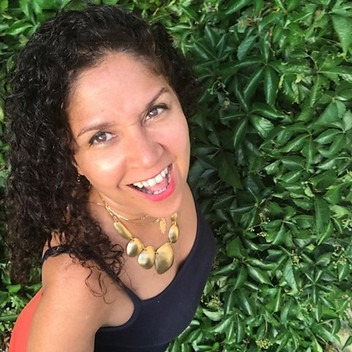
LUZ CLAUDIO
Tenured Professor of Environmental Medicine & Public Health, Chief of Division of International Health, Director of Internship Programs at Icahn School of Medicine at Mount Sinai
TED Attendee
New York, New York, United StatesAbout LUZ
I am a…
Brainstormer, Connector, Consultant, Educator/Teacher, Environmentalist, Global soul, Idea generator, Journalist, Life mentor, Parent, Scientist, World traveler, Writer/Editor
Bio
Dr. Luz Claudio is a scientist, author, and educator. Her mission is to make science easy to write for students and emerging scientists, easy to understand for non-scientists, and easy to use for everyone.
As a scientist, Dr. Claudio investigates how environmental and social factors interact, producing disease in underserved communities, disproportionally affecting children and causing health disparities. She collaborates internationally with data scientists, physicians, and community organizations to address health disparities of environmental origin and to make scientific findings accessible to the public. For example, using research data she created maps that clearly illustrated disparities in asthma rates in New York City. Her groundbreaking work resulted in community-based interventions to reduce asthma in children, especially in minority communities.
As an author, Dr. Claudio has published numerous scientific papers which she translates into practical information for the public. She is also the author of the book: How to Write and Publish a Scientific Paper: The Step-by-Step Guide and has published innovative materials aimed at improving biomedical research training. She has mentored hundreds of students and young scientists and has received several awards for her skills as an effective mentor and educator. She is also a well-recognized researcher in global health and has created several international training programs in environmental medicine and related fields in countries including Brazil, Chile, Mexico, South Africa, Thailand, and Spain.
Dr. Luz Claudio is originally from Puerto Rico, where all her family lives.
Her first exposure to environmental health came from learning about medicinal plants in her grandmother's garden. Luz completed her undergraduate degree in marine biology at the University of Puerto Rico. She moved to New York City to pursue her doctoral degree in neuropathology at Albert Einstein College of Medicine and her postdoctoral training at the US Environmental Protection Agency. She is currently is a tenured professor of environmental medicine and public health and Chief of the Division of International Health at the Icahn School of Medicine at Mount Sinai in New York City.
I'm passionate about
Mentoring students and young scientists, Environmental health, Science communication, Reducing pollution and environmental health threats.
I want to create tailored internship programs that will help enhance diversity in corporations and academic institutions.
An idea worth spreading
IDEA WORTH SPREADING #1: Decentralized Environmental Actions Can Still Have Quantifiable Positive Impact
All people, from children to corporate CEOs, can take action to improve environmental health. The biggest obstacle to taking action is helplessness.
Even though there may be logical, and even easy ways to help the environment, there’s a sense that little can be done now to improve environmental health. For one, there is little incentive for companies to reduce their environmental footprint. Thus, for example, excessive packaging and use of potentially toxic chemicals are rampant in consumer products and services, even when there are easy solutions that would reduce environmental impacts.
Another issue is that the public is overwhelmed with information about the doomed environment, to the point that there is a sense of helplessness and the assumption that it is too late for individuals to do something meaningful to help.
What if there was a way to make sure that everyone knows that all is not lost? That there are still things that we all can do to help the environment?
I envision a Consortium of Environmental Health Scientists that would identify “easy wins”, changes that manufacturers, distributors, retailers, and other corporations can make that would reduce the environmental impact of their products. The Consortium would identify corporate leaders who are open to making changes in their industry practices, provide consultation, and quantify the impact of these changes so that other corporate leaders and consumers may be inspired to do the same.
I also envision that the public, from school children to grandparents, shall have easy-to-understand actions that they can take to improve environmental health for themselves and their families. Together, we can make quantifiable changes to help the planet and our health.
I am an environmental health scientist with over 25 years of experience. In my TED Talk (bit.ly/LuzClaudioTEDTalk) I tell the story of how I worked with my students, interns, and community leaders to address the asthma epidemic in underserved communities in New York City. I want to continue to expand on this impact by addressing one of the root causes of respiratory disease - environmental pollution.
-------
IDEA WORTH SPREADING #2: Well-designed Internship Programs to Improve Corporate Diversity and
Lack of workforce diversity in corporate and academic institutions leads to stagnation, slow response to demographic changes, and paucity of creative idea generation. Although most institutions stand to gain from having a more diverse workforce, one reason that is often given for the lack of diversity is that it is difficult to find and recruit top individuals who are of underrepresented minority backgrounds. This is in part because there are relatively few of these individuals available.
To alleviate this issue, I propose a better-designed pipeline that moves highly-qualified underrepresented minorities from the internship ranks up through the corporate ladder.
I have created and directed three very successful internship programs at a top medical school. We used a variety of metrics to assess the success of the internship programs. The data showed that the 5 key components of these internship programs lead to the placement of minority workers in positions of leadership.
Now, I am in the process of writing a book to codify how to create successful internship programs to improve the success rate of underrepresented minority interns. The book will detail how these internships can serve as a pipeline to improve diversity in corporations and academic institutions.
In my TED Talk (bit.ly/LuzClaudioTEDTalk), I tell the story of how an Africa American student changed the trajectory of my research. The new research project that this student proposed, changed the way we do community-engaged research.
Areas of expertise
big data, Diversity, Environmental Medicine, Epidemiology, Global health, Internships, Mentoring, Pediatric Environmental Health, Public Health, Research Training, Science Writing
The TED story
A former student forwarded me the announcement for the TED Residency Program. She knew I would be interested, but the deadline was looming and I was way too busy with work to complete the application. And with my husband out on tour playing trombone with Phil Collins, I not only had to get my work done at the office, but I also had to pick up my daughter from school, have her practice her trumpet and do the million other things mothers (especially "single" mothers must do).
One day, I received an email from my daughter's school that there would be early dismissal that day. Why! I screamed at my phone! Although I enjoy every minute I get to spend with my daughter, that day was NOT a good day.
I decided to make it a "Take your daughter to work day". I set her up in an empty cubicle, set up a computer for her, and hoped that she would use her time wisely while I worked in my office and tried to focus on the most urgent deadlines.
Then the TED Residency application announcement popped up again on my screen. I remembered the first TED Talk I ever watched, one about autism. I remembered how much I have learned from TED over the years. So yes. I started to fill in the application quickly. Why not give it a try?
Going through the application I got to the part where they ask for a video explaining your "idea worth spreading". Ay!
So I called upon my new assistant, I mean, my daughter and said: "Hey, do you want to make a video with me?" At 11 years old, she has probably seen more videos of TED Talks than I have in my lifetime. So, we did a video together of an idea we've had for a while. We did one take and sent the video with the application, not thinking that we had a chance, but thinking that it was something fun to do together at the office.
A couple of weeks later, we traveled to Puerto Rico for summer vacation, when I got an email with the very recognizable TED on the "From" section. Surprisingly, they wanted to schedule an interview as I had been selected as a finalist for the Residency. I could hardly believe that we had made it that far!
Since we were already in Puerto Rico, I set up for a video interview. During the 20-minute video interview, the power went out twice! I followed up with an email apologizing for this. Puerto Rico was still recovering from the devastating effects of the hurricanes almost a year prior and blackouts were still common.
To my surprise, I was selected as a TED Resident for the Fall semester of 2018. My daughter was just as excited. If it hadn't been for her, perhaps my application would have been lame and not selected.
What a privilege to have this opportunity. I am very thankful to TED (and my daughter) and looking forward to being part of the TED community.
Things you might not know
I am a scientist and "nerd", but I am also good at salsa dancing.