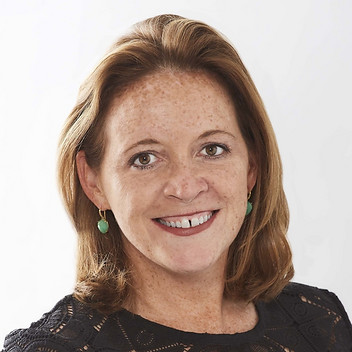
About Katie
I am a…
Activist, Brainstormer, Change Agent, Christian, Connector, Idea generator, Parent, Potential employer, Social entrepreneur, Startup
Bio
Katie Hood is Chief Executive Officer of the One Love Foundation, a position she has held since 2014. Under her leadership, the organization has become the nation’s leading educator of young people on the topic of healthy and unhealthy relationships, as both a primary prevention strategy for relationship abuse and as an investment in the relationship health of the next generation. One Love’s award-winning film-based, peer-to peer educational workshops have reached nearly one million young people in-person, and over 100 million have engaged with One Love’s educational campaigns online.
Prior to joining One Love, Katie was Chief Executive Officer at the Michael J. Fox Foundation for Parkinson’s Research where for nine years, she worked to drive research progress toward a cure for Parkinson’s disease. Katie also worked as a philanthropic consultant and served as a Visiting Lecturer at Duke University’s Sanford School of Public Policy. Before discovering her passion for philanthropy, she held positions at both Goldman Sachs and Bain & Company. Katie is a passionate, dynamic speaker who has appeared at TED, Aspen Ideas: Health, Milken Global Conference, Fortune’s Most Powerful Women Conference and The Nantucket Project. She is frequently quoted as an expert on dating violence and healthy relationships in national media outlets from ABC News to Teen Vogue.
Katie received her bachelor’s degree in Public Policy from Duke University, and MBA from Harvard Business School. She currently serves on the Dean's Board of Advisors for Harvard Business School and the President's Advisory Council of Concordia College, and has served on the Advisory Board of the National Institutes of Neurological Disease and Stroke (NINDS) at the NIH, and as an advisor to the Institute of Medicine at the National Academies in Washington DC. Katie lives outside New York City with her husband and four children.
I'm passionate about
Changing the world for the better. I truly believe we each have a role to play! The power of all of us is incredible.
An idea worth spreading
From my TED talk this year...
When you think about your child, a close friend or a romantic partner, the word LOVE probably comes to mind and instantly other emotions rush in – joy and hope, excitement, trust, security, and yes, sometimes sadness and disappointment. There might not be a word in the dictionary that more people feel connected to than love.
But given its central importance in our lives, isn't it interesting that we’re never explicitly taught how to love? We build friendships, navigate early romantic relationships, get married and bring babies home from the hospital with the assumption that we’ll figure it out.
The truth is we often harm and disrespect the people we love. It can be subtle things like using guilt to convince a friend to spend time with you or sneaking a peak at a spouse’s texts or shaming your child for their lack of effort at school. 100% of us will be on the receiving end of unhealthy relationship behaviors and 100% of us will do unhealthy things. It’s part of being human.
In its worst form, the harm inflicted on loved ones shows up as abuse and violence and in fact relationship abuse is something 1 in 3 women and 1 in 4 men will experience in their lifetimes.
If you’re like most people, when you hear these stats you say – ‘That would never happen to me!’ It’s instinctual to turn away from the words abuse and violence. To think they happen to someone else, somewhere else. But unhealthy behaviors and abuse are all around us – we just call them different things and we ignore the connection. Abuse sneaks up on you, disguised in unhealthy love.
Knowing the signs of unhealthy relationships can help you better “audit” and understand every relationship in your life. For the first time you might understand why you feel disappointed in a friendship. Or why every interaction with a certain family member leaves you anxious and discouraged. Or maybe you even recognize how your own intensity and jealousy is creating problems with colleagues at work. Understanding is the first step to improving, and while you can’t make every unhealthy relationship a healthy one – some you might have to leave behind – you can do your part to learn how to do relationships better.
So first, here’s the great news… Building healthy relationships is not rocket science. The core elements are simple. Open Communication. Mutual Respect. Trust. Patience. We can practice them every day.
For too long, we’ve treated relationships as a soft topic when actually they are one of the hardest and most important skills to master in life. Not only can knowledge about unhealthy signs help you avoid falling down the rabbit hole of unhealthy love, understanding and practicing the art of being healthy can improve nearly every aspect of your life.
I’m completely convinced that while love is an instinct, the ability to love better is a skill we can all build and improve on over time.
The TED story
Stepping onto the TED stage in April 2019 was hands down the most terrifying experience of my life. I could feel the opportunity in the moment - to help millions of people better understand and think about their relationships - and I just didn't want to screw it up! The months of writing and practicing...and ultimately in the week before, memorizing my talk - had been so hard for me. And I'm a person who in many ways talks for a living! I had never prepared a talk so specifically and was so grateful for the support the TED team had given me.
I woke up the morning of the talk and felt calm for the first time in weeks (not kidding, i was STRESSED!) I was nervous, but felt prepared. I found myself backstage listening to Adele over and over to drown out the other noise. My nerves were down and as i stepped out of the green room to approach the stage, I looked up at the sky and said, "Thank you God for the opportunity to help people."
I remember being on stage, but don't remember saying specific words. I was nervous for sure -as people who know me well could tell - but I didn't forget anything, and a story about my son at the end really connected with the room. I stepped off stage so relieved.
And instantly people began approaching me. First in the green room as they took off my mic, then in the makeup room where others were preparing. Then in the hallway and in the days that followed at the meeting. Then through emails and outreach from around the globe in the weeks and months that have followed.
They told me their stories - sometimes for the first time. They asked questions about friends and family members they were worried about. They shared with surprise that they recognized some of the behaviors I'd described in themselves. Everyone wanted more information. Everyone wanted to help.
I'm so grateful for the opportunity to have shared my ideas and learnings at TED 2019 and I'm so eager to stay connected to this TED family.
Things you might not know
- listening to others & hearing and what they really mean
- connecting dots
- google searching
- singing - mostly in church or in the car - love harmonizing with my daughter and my mom
- coming up with new ideas
- according to my kids, making grilled cheese, scrambled eggs, and buttered pasta. according to adults, making vegetable side dishes:-) and an awesome tossed salad
- hosting and entertaining with my husband